
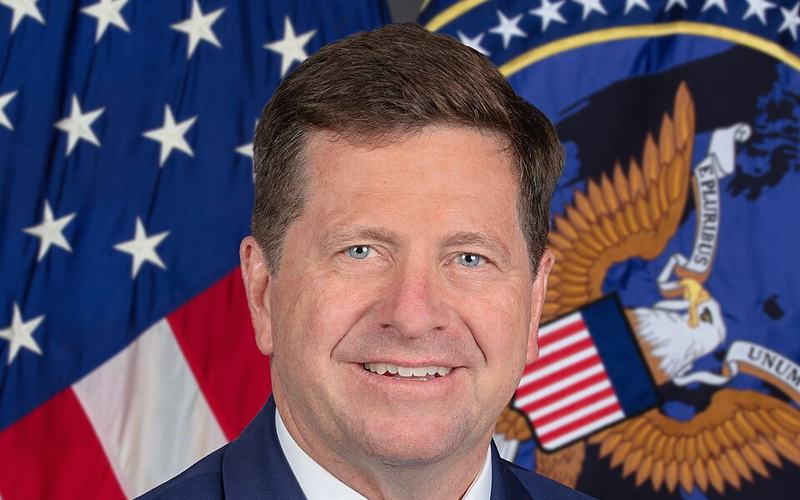
Director of National Intelligence Jay Clayton has halted plans for a private dining room and firing range at the agency’s Virginia headquarters while dismantling a declassification-focused unit established by his predecessor, Tulsi Gabbard. The changes mark Clayton’s first major moves since the Senate confirmed him in a 51-47 vote on July 28.
Congress created the Office of the Director of National Intelligence (ODNI) after the September 11, 2001, terrorist attacks to improve coordination and intelligence sharing across the nation’s spy agencies. Officials familiar with Clayton’s approach said he wants to refocus the office on that central responsibility rather than projects he considers unnecessary or too expensive.
When Clayton arrived at ODNI headquarters, known as Liberty Crossing, workers were converting the office of the official responsible for preparing the president’s daily intelligence briefing into a private dining room. Clayton stopped the project and ordered the office restored. He also halted plans for a firing range, concluding that neither project justified the cost. A small museum completed before his arrival will remain.
Clayton has also effectively disbanded the Director’s Initiatives Group, which Gabbard created to investigate the politicization of intelligence and pursue the declassification of older government records. The unit clashed with CIA officials, while critics argued that its work risked introducing politics into intelligence operations. Its leader, Paul McNamara, recently stepped down, although people familiar with the situation said Clayton did not force officials out.
The new director has installed a chief operating officer, tightened rules governing executive travel and reassigned or dismissed some personnel. The changes follow a broader restructuring under acting director Bill Pulte, who took over after Gabbard announced her resignation, effective June 30. Pulte said his staff reductions cut ODNI’s workforce by approximately 30%.
Questions have also emerged about the future of senior personnel. Aaron Lukas, the agency’s second-highest-ranking official and a career CIA officer, has reportedly sought a position leading the CIA’s operations in London. An ODNI spokesman denied that Lukas was attempting to leave the agency and said Clayton was continuing efforts by previous leadership to reduce waste and restore accountability.
Clayton, who previously chaired the Securities and Exchange Commission, is also handling a separate assignment for President Donald Trump. On October 4, Trump selected him to lead a new task force called the “Super Intelligence Force,” a role officials say is consuming much of his time.
Clayton’s confirmation drew opposition from every Senate Democrat, and he declined to directly answer questions about the 2020 presidential election during his confirmation hearing. However, Rep. Jim Himes of Connecticut, the top Democrat on the House Intelligence Committee, said last week that intelligence sharing with Congress had improved, describing the change as significant. Himes also noted that several legally required assessments of election threats remain overdue.

Comments
No comments yet. Be the first to share your thoughts.