
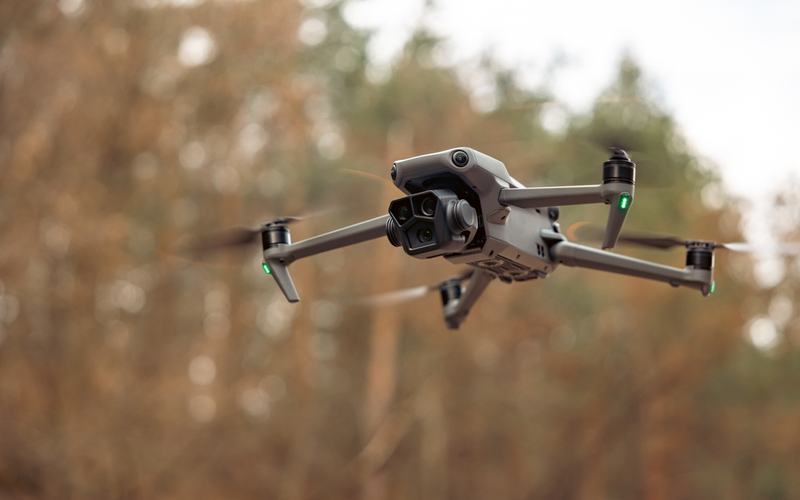
China has become a major foreign supplier of the components and raw materials Russia needs to expand its drone warfare against Ukraine, according to a report published Oct. 26 by the Washington-based Jamestown Foundation. The findings highlight how Chinese manufacturing networks are supporting Russia’s military production and raising concerns that similar supply chains could help Iran increase its drone capabilities against American forces and U.S. allies in the Middle East.
The report documents Chinese assistance across multiple stages of Russia’s drone manufacturing process, from advanced navigation equipment and engines to materials used to construct airframes.
Russian production of attack drones has increased sharply as Moscow relies on large waves of relatively inexpensive unmanned aircraft to strike Ukrainian cities, military facilities and energy infrastructure. Ukrainian military intelligence figures cited by Jamestown indicate that Russian state orders for Iranian-designed Shahed-type attack drones rose from approximately 12,000 in 2024 to more than 100,000 in 2026.
Production of newer jet-powered Geran-4 and Geran-5 drones has reportedly reached approximately 3,000 units per month, according to the analysis. The growing numbers have placed additional pressure on Ukraine’s air defenses, which must contend with increasingly large waves of incoming aircraft.
China’s contribution extends beyond supplying finished electronic components. Documents cited in the report show that the state-owned Jilin Chemical Fiber Group shipped 46 metric tons of polyacrylonitrile precursor, a material used to manufacture carbon fiber, to a Russian subsidiary of state-owned nuclear corporation Rosatom.
Between March 2022 and January 2025, the Russian operation imported approximately 3,000 tons of Chinese synthetic yarn valued at $21.4 million, the report found. Carbon fiber is particularly useful in drone construction because its strength and low weight allow manufacturers to build aircraft capable of carrying payloads over longer distances.
China accounted for approximately 72% of Russia’s carbon fiber imports by weight during the first nine months of 2024, according to Jamestown. The report also cited research estimating that Chinese suppliers accounted for roughly 75% of Russian imports of battlefield goods subject to Western export controls.
The findings reinforce concerns among Western intelligence officials that China’s industrial support has become an important factor in Russia’s ability to sustain its war effort. In 2025, Estonia’s foreign intelligence chief, Kaupo Rosin, told reporters that Beijing’s interests included preventing a Russian defeat in Ukraine, arguing that such an outcome would benefit the United States, China’s principal strategic rival.
A separate assessment by the Center for Strategic and International Studies also identified assistance from China, Iran and North Korea as an important source of support for Russia’s military operations. The assessment highlighted Chinese optical-fiber supplies as particularly significant after Ukrainian attacks disrupted Russia’s domestic production capacity.
The implications extend beyond the war in Ukraine. A separate Jamestown analysis of Iran’s drone industry found that critical technologies and manufacturing equipment used in Tehran’s unmanned aircraft programs can be traced to China’s extensive civilian manufacturing sector.
That analysis warned that Chinese drone supply networks are difficult to dismantle because they consist of numerous manufacturers and suppliers rather than a single production chain. Although individual companies may be targeted, the broader network can remain capable of supplying components even when sanctions disrupt particular businesses.
The Wall Street Journal has also reported that Chinese companies continue to supply Russia and Iran with drone-related components, including motors, batteries, microcircuits and fiber-optic materials, despite U.S. sanctions.
For Washington and its allies, the findings raise questions about how effectively existing export controls can restrict the flow of dual-use technology into hostile military programs. China’s extensive manufacturing base is helping Russia expand its drone campaign against Ukraine, while the potential for similar supply networks to strengthen Iran’s capabilities presents an additional security concern for American forces and regional partners.

Comments
No comments yet. Be the first to share your thoughts.