
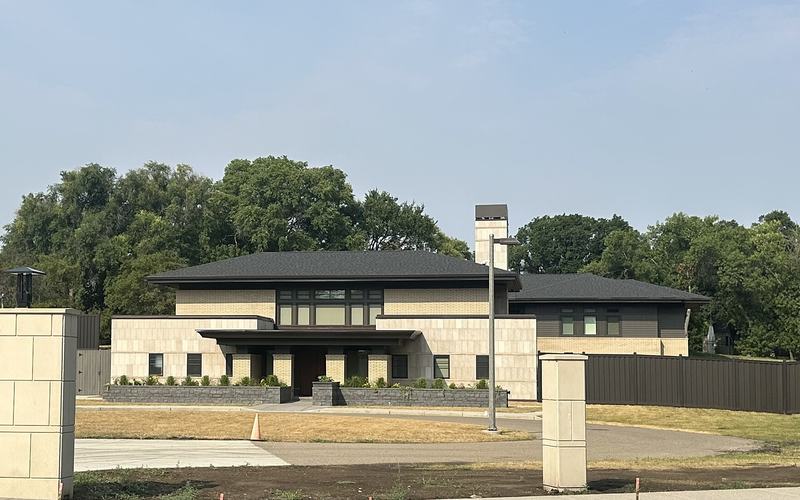
Archaeologists have uncovered seven coffins containing human remains and a wooden box near the governor’s residence in Bismarck, North Dakota, at a site that served as the city’s first community cemetery during the 1870s.
Preliminary analysis by the Office of Management and Budget found that the remains belonged to two women, two men, two teenage boys and a toddler. The discovery is shedding new light on the early history of Bismarck and the people who helped establish the growing frontier community.
The remains were first discovered May 19, when construction contractors excavating the southwest corner of the property near Fourth Street and Boulevard Avenue came across human remains, coffin hardware and fragments. The discovery halted construction and prompted the State Historical Society of North Dakota to conduct a ground-penetrating radar scan before archaeological excavation began Sept. 1.
Brandon Solberg, director of facilities management for the state Office of Management and Budget, said crews investigated more than 80 locations before completing their fieldwork in early September.
The site served as Bismarck’s first community cemetery from 1873 to 1877. Most of the graves were believed to have been moved to other cemeteries after the original burial ground was closed, but the newly discovered coffins indicate that some remains were left behind.
Kara Haff, a spokesperson for the State Historical Society of North Dakota, said officials in the 1880s believed they had successfully relocated nearly everyone buried there.
“They had thought in the 1880s that they had exhumed everybody,” Haff said. She pointed to a historical newspaper article stating that all but two graves had been moved, with the remaining work expected to be completed the following week. The recent discovery suggests that the relocation effort left more graves undisturbed than officials had believed.
The cemetery holds significance beyond the newly uncovered remains. A 2012 historical account recalled an 1883 visit by a reporter from the Bismarck Tribune, who described the weathered grave markers and reflected on how the rapidly growing city had expanded around the burial ground. The cemetery contained the graves of pioneers and frontiersmen who had died during the difficult early years of settlement.
The reporter also warned that the graves risked being forgotten as weeds and wildflowers covered deteriorating headstones and the city continued to develop around them. The recent excavation has brought renewed attention to those early residents and the challenges of preserving historical burial sites as communities grow.
In 2021, KXNET also reported on the historical importance of abandoned cemeteries in North Dakota, including the Bismarck site. Morton County Commissioner Andy Zachmeier said the people buried in such locations helped establish the region despite the sacrifices involved in building new lives there.
Archaeologists are expected to complete their analysis of the remains and recovered artifacts early next year. Until then, the remains will be carefully stored before being reburied at a local cemetery.
The discovery underscores how much remains to be learned about the people who lived and died during Bismarck’s earliest years, even at a site where officials once believed the burial ground had been fully cleared.

Comments
No comments yet. Be the first to share your thoughts.