
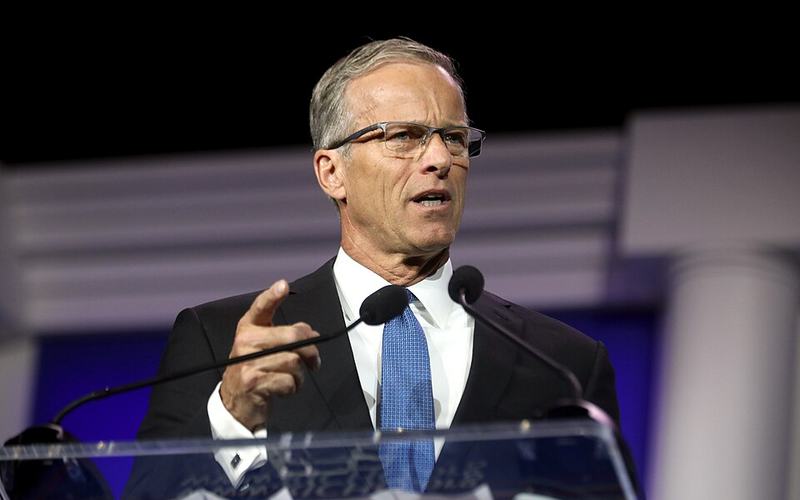
Senate Majority Leader John Thune said Wednesday he plans to advance legislation that would codify select AI safety protections, even as he praised the voluntary agreement reached between President Trump and major technology executives earlier in the week.
Thune, a Republican from South Dakota, described the accord signed Tuesday at a White House luncheon as a positive development. The document commits leading AI firms including those led by executives from OpenAI, Anthropic, Meta, Google, Nvidia, and others to implement internal controls, external audits, and board oversight to mitigate risks such as unintended hacking or misuse in areas like cybersecurity and biosecurity. Trump characterized the pact as morally binding and likened it to a constitution.
Despite endorsing the industry-led approach, Thune indicated that conversations continue in the Senate about a legislative framework. "We are continuing to have those conversations up here on whether or not we can come up with some sort of a legislative framework that would codify some safety protections too," he told Axios. He has previously stressed that real threats exist and that guardrails make sense for frontier models without stifling innovation or harming U.S. competitiveness against China.
The push comes amid ongoing bipartisan efforts. Thune has worked with Sen. Amy Klobuchar, D-Minn., and Senate Commerce Chairman Ted Cruz, R-Texas, on measures requiring risk assessments and mitigation plans for advanced AI systems. Earlier versions of such legislation passed committee in prior Congresses.
Thune has maintained a measured stance compared to some colleagues, favoring a light-touch regulatory role for Congress while acknowledging the need for accountability on the most capable models. The voluntary accord echoes elements of prior agreements but aligns with the administration's preference for self-policing by companies rather than expansive new rules.
Lawmakers continue to monitor developments as AI capabilities advance rapidly. Thune's comments suggest Senate Republicans see value in both voluntary commitments and targeted statutory measures to address potential risks.

Comments
No comments yet. Be the first to share your thoughts.