
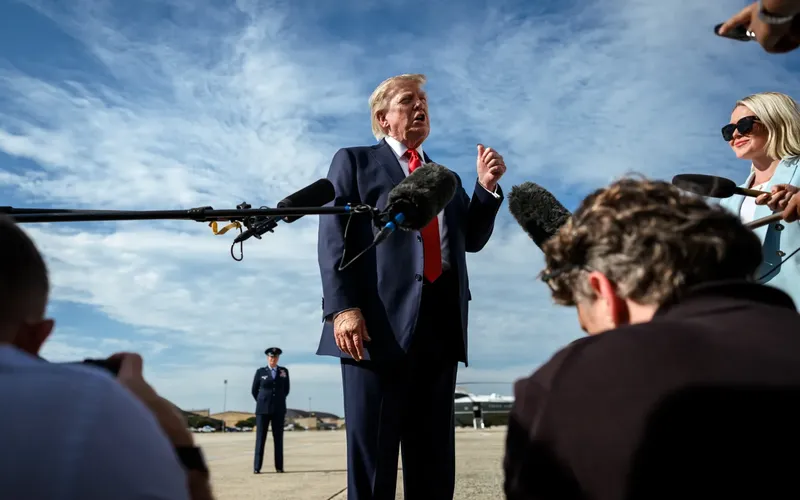
President Donald Trump announced Friday that all 50 states, the District of Columbia, and Puerto Rico will participate in a new Medicaid drug pricing model designed to lower costs for prescription medicines.
The program, known as the GENEROUS model, extends most-favored-nation pricing to state Medicaid programs. Under the arrangement, participating drug manufacturers agree to provide rebates that align Medicaid prices for selected brand-name drugs with the lowest prices paid in other developed countries, including Britain, France, Germany, Italy, Canada, Japan, Denmark, and Switzerland.
Trump made the announcement in the Oval Office, flanked by Health and Human Services Secretary Robert F. Kennedy Jr., Centers for Medicare and Medicaid Services Administrator Mehmet Oz, and Republican governors from South Dakota, Mississippi, and Arkansas. He described the development as a major achievement ahead of the midterm elections.
The White House said the administration has secured agreements with 26 pharmaceutical companies, covering about 89 percent of the branded U.S. drug market. The deals include companies such as Pfizer, Eli Lilly, Novo Nordisk, Amgen, and others. The model covers hundreds of drugs across major therapeutic areas, including oncology, diabetes care, and asthma.
The Council of Economic Advisers estimates the Medicaid-specific changes will save taxpayers $64.3 billion over the next decade, with $36.6 billion in federal savings and $27.6 billion for states. Broader most-favored-nation deals are projected to deliver more than $600 billion in total savings for Americans.
Trump has pursued this approach since taking office, signing an executive order last year to implement most-favored-nation pricing. The administration has touted recent data showing the sharpest annual drop in prescription drug prices in more than 60 years. Medicaid beneficiaries already face low copayments, so the primary benefit flows to state and federal budgets that fund the program.
Republican lawmakers praised the rollout. Rep. Dan Meuser of Pennsylvania called it an important milestone in expanding lower prices nationwide.
The policy builds on voluntary agreements between the administration and manufacturers, which also include commitments to launch new drugs in the U.S. at prices aligned with international benchmarks. Officials said the savings will allow states to redirect funds toward other healthcare priorities or taxpayer relief.

Comments
No comments yet. Be the first to share your thoughts.