
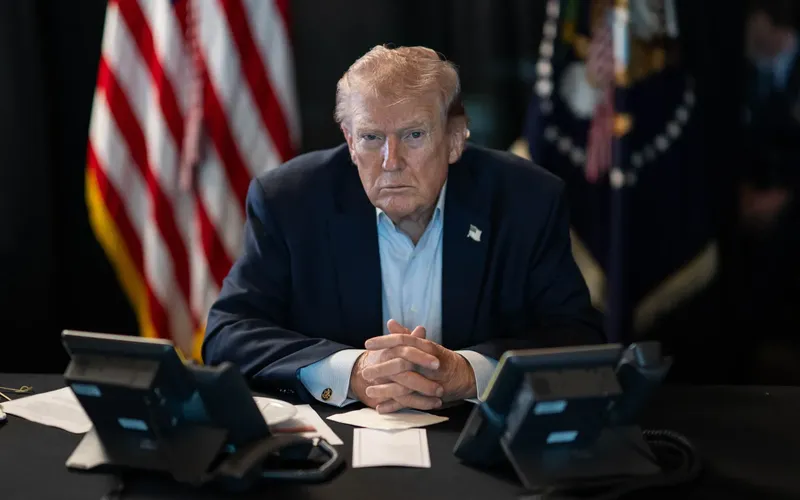
President Donald Trump said Friday that the United States will not restrict diesel exports after G7 nations agreed to release 100 million barrels of oil and fuel products from emergency reserves.
Trump’s announcement came after the G7 held an emergency virtual meeting focused on surging fuel prices and strained global energy supplies.
“We’re not going to be doing the export ban,” Trump said, according to Reuters.
The decision followed pressure from the Trump administration on European allies to tap their emergency diesel reserves. Trump said European nations had agreed to release a “massive amount” of diesel from their stockpiles, with the process beginning immediately.
Under the agreement, G7 members and partners will coordinate through the International Energy Agency to release 100 million barrels of oil and fuel products over four months. The plan calls for a substantial release of diesel during the first 20 days.
The G7 did not provide a specific breakdown of how much of the 100 million barrels would consist of crude oil, diesel or other petroleum products. It also reaffirmed a commitment among G7 nations to avoid energy export restrictions that could further tighten global supplies.
The agreement came after the Trump administration warned Thursday that the United States could restrict diesel exports if European countries did not release more of their emergency inventories.
Treasury Secretary Scott Bessent had urged European governments to increase diesel supplies, arguing that the United States was taking steps to address the energy crunch and expected its allies to do the same.
Trump also spoke with French President Emmanuel Macron, who chaired Friday’s G7 video conference, before the meeting. Macron subsequently confirmed the coordinated reserve release.
The administration’s consideration of an export ban had raised concerns within the energy industry about potential effects on fuel supplies. Energy Secretary Chris Wright previously argued against a blanket ban, saying it could fill U.S. storage capacity and force refiners to reduce production.
A reduction in refining could potentially affect supplies of other fuels, including gasoline and jet fuel, in addition to diesel.
The pressure comes as diesel prices have surged amid disruptions tied to the war with Iran, restrictions on Russian diesel exports and reduced fuel exports from Chinese refiners. U.S. retail diesel recently reached a record $6.52 per gallon, according to the Associated Press.
The G7 agreement produced an immediate reaction in energy markets. U.S. and European diesel futures declined after news of the planned reserve release, while crude prices also moved lower.
The International Energy Agency will monitor the implementation of the agreement and provide a follow-up report within 20 days. The G7 also said it would consider additional diesel releases if necessary.
For now, the agreement removes the immediate prospect of a U.S. diesel export ban while putting millions of barrels of emergency fuel supplies into the global market.

Comments
No comments yet. Be the first to share your thoughts.