
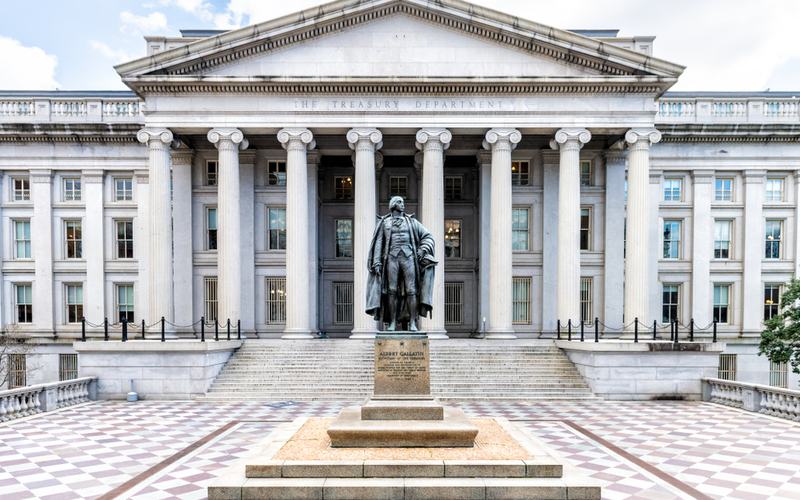
Government bond yields surged across major economies Thursday, with U.S. Treasury yields reaching multi-decade highs as investors confronted persistent inflation pressures, rising energy costs and expectations for higher interest rates.
The global bond selloff pushed borrowing costs higher from the United States to France, Britain and Japan, increasing pressure on governments, businesses and households that rely on borrowing.
The U.S. 10-year Treasury yield climbed as high as 5.34% during Thursday’s trading session, its highest level since 2002, before retreating to around 5.26% as investors stepped in to buy bonds later in the morning.
Bond yields move inversely to prices, meaning the latest selling has driven borrowing costs higher across major markets.
The 10-year Treasury is closely watched because it serves as a benchmark for mortgages, corporate borrowing and other financial assets. Higher yields can also increase the amount governments must spend servicing their debt.
The latest increase follows a sharp rise during the third quarter. The 10-year Treasury posted its largest quarterly increase in yields this century during the three months ending in September.
Energy prices have been a major source of concern for investors as higher costs threaten to keep inflation elevated. At the same time, massive investment in artificial intelligence and data centers has increased competition for capital while strengthening expectations for economic growth.
“As yields have crept higher, that is going to tighten financial conditions and could increase the risk of a slowdown,” Danny Zaid, a portfolio manager at TwentyFour Asset Management, said.
The pressure is particularly pronounced in France, where 10-year government borrowing costs climbed to their highest level since 2002 and approached 5%.
France is preparing to present its 2027 budget as the government faces the difficult task of pushing spending cuts and other deficit-reduction measures through a divided Parliament.
The spread between French and German 10-year borrowing costs has also widened to levels not seen since the European debt crisis of the 2010s. The cost of insuring French government debt against default has reached its highest level since 2013.
Other major economies are facing similar pressure.
Britain’s 30-year government bond yield moved above 6% Thursday, reaching its highest level since 1998. In Japan, government bond yields have recorded five consecutive quarters of double-digit increases as inflation has returned after decades of deflation.
The higher borrowing costs are adding to concerns about government finances around the world. The Institute of International Finance estimates that advanced economies paid more than $3.3 trillion in interest on internationally traded government bonds over the past year.
Despite the bond-market turmoil, economic activity has remained relatively resilient. Manufacturing activity across Europe and Asia expanded last month, helped in part by investment tied to artificial intelligence.
That stronger economic activity has contributed to expectations that central banks may be able to maintain higher interest rates for longer without immediately triggering a severe downturn.
Investors have also sharply scaled back expectations for U.S. interest-rate cuts. Markets are now pricing in additional Federal Reserve rate increases through the middle of 2027, while inflation remains a central concern for policymakers.
The bond selloff has also begun to spill into other financial markets. Stocks and credit markets experienced volatility Thursday, while an index tracking credit-default swaps on junk-rated companies reached its highest level since early April.
The combination of higher energy prices, persistent inflation, increased government borrowing costs and elevated demand for capital is leaving investors increasingly focused on whether the global economy can continue growing while absorbing significantly higher interest rates.

Comments
No comments yet. Be the first to share your thoughts.