
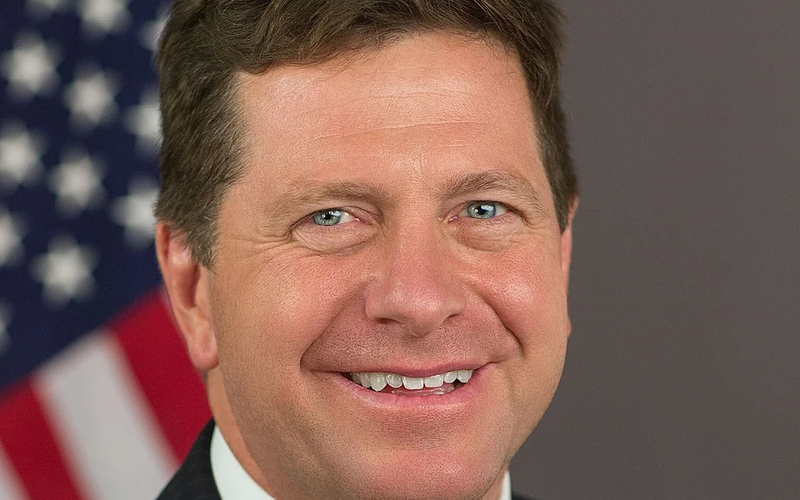
President Donald Trump is reportedly considering Director of National Intelligence Jay Clayton to oversee the White House’s artificial intelligence agenda while continuing to lead the nation’s intelligence community.
Trump is expected to name Clayton as the administration’s next AI czar, according to CBS News, citing sources briefed on the discussions. Under the plan, Clayton would retain his position as director of national intelligence while taking responsibility for the broader AI portfolio.
The White House has not confirmed the selection and pushed back on reports that a decision had been finalized. “Any personnel announcement will be announced directly by the President,” a White House official said, describing the accounts as “baseless speculation.”
Trump said last month that he intended to appoint an AI czar and establish an “AI Force.” The potential appointment follows a White House meeting Tuesday with executives from major AI and technology companies, who agreed to a voluntary pledge to maintain safety standards that Trump described as “morally binding.” After the meeting, Trump told reporters he expected to name an AI czar within three or four days.
Clayton has extensive experience in federal law enforcement and financial regulation. He previously served as U.S. attorney for the Southern District of New York and chaired the Securities and Exchange Commission during Trump’s first administration. The Senate confirmed him as director of national intelligence in a 51-47 vote, and he assumed the post in August, overseeing the 18 agencies of the U.S. intelligence community. He replaced Bill Pulte, who served as acting director for about 40 days.
During his July confirmation hearing, Clayton described artificial intelligence as a “game changer” that represents both an opportunity and a potential threat to the United States. If selected, he would become the second person to hold the AI czar role in Trump’s second term. Venture capitalist David Sacks previously oversaw AI and cryptocurrency policy before leaving the White House but continues to advise Trump and participated in Tuesday’s meeting.
The possible dual role comes as Washington debates the pace of federal AI regulation. Trump has opposed broad new restrictions, arguing they could slow technological development and economic growth while benefiting China. Combining the intelligence post with AI oversight would place the intelligence community alongside the administration’s effort to develop and manage AI policy, an area Trump has identified as both an economic and national-security priority.

Comments
No comments yet. Be the first to share your thoughts.