
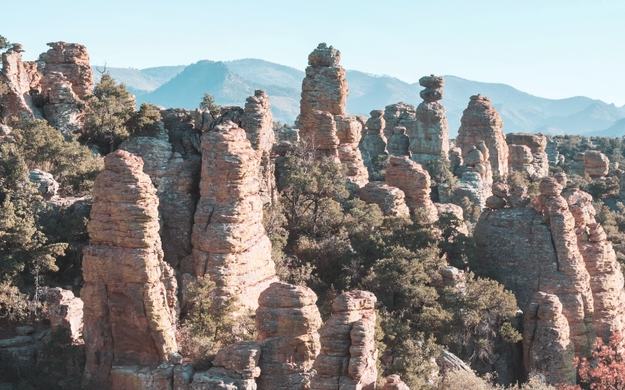
President Donald Trump signed the Chiricahua National Park Act into law Tuesday, elevating the 102-year-old Chiricahua National Monument in Cochise County to Arizona's fourth national park.
The roughly 12,000-acre site, known for its dramatic rhyolite pinnacles and balanced rock formations, joins Grand Canyon, Petrified Forest, and Saguaro national parks. It becomes the nation's 64th national park.
The bipartisan legislation, introduced in the House by Arizona Rep. Juan Ciscomani and Rep. Greg Stanton, passed the House in March and cleared the Senate on Sept. 30. Both of Arizona's senators, Mark Kelly and Ruben Gallego, supported the measure.
Supporters highlighted the potential for increased tourism and economic growth in rural southeastern Arizona. Local leaders noted that national park status would draw more visitors to the area while preserving its unique landscape.
Chiricahua National Monument was established in 1924 by President Calvin Coolidge. The redesignation follows years of advocacy from conservation groups, local officials, and Arizona's congressional delegation.
The new park status recognizes the site's cultural significance, including its importance to Apache heritage, and its geological features formed by ancient volcanic activity. Arizona officials and tourism advocates welcomed the change, citing benefits for small businesses and outdoor recreation in the region.
The elevation to national park status is expected to boost local economies through higher visitation rates and related spending on lodging, dining, and guided tours. Rural communities in Cochise County stand to gain from the enhanced national profile that comes with the park designation.
Geologically, the area showcases the results of massive volcanic eruptions millions of years ago that created the striking hoodoos and rock spires. Visitors have long been drawn to the scenic drives and hiking trails that wind through the formations.
Culturally, the park holds deep meaning for Native American tribes, particularly the Apache, who have historical ties to the land. The redesignation underscores efforts to honor that heritage alongside conservation goals.
Federal land managers anticipate that the new status will bring additional resources for maintenance and interpretation programs at the site. This comes as national parks across the country continue to see strong public interest in outdoor destinations.

Comments
No comments yet. Be the first to share your thoughts.