
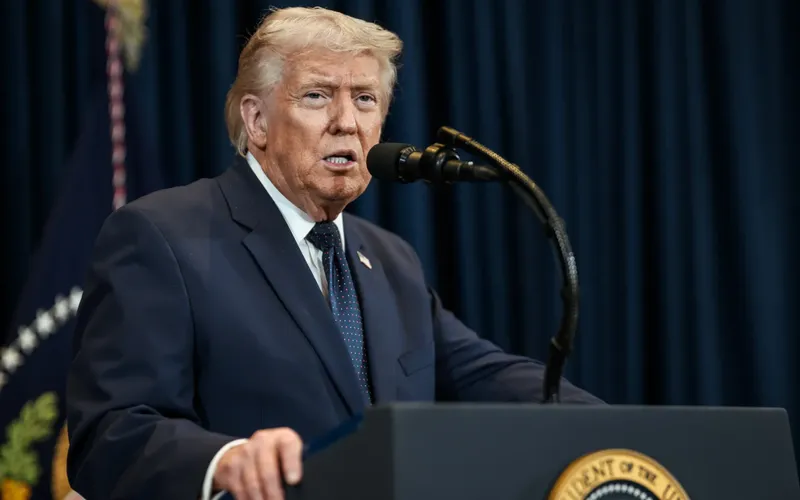
President Donald Trump announced a new Fraud Whistleblower Incentive Program on Tuesday that would pay individuals up to 1 percent of the fraud they help uncover through tips to federal authorities.
The president made the announcement in the Oval Office alongside Vice President JD Vance, who leads the administration's anti-fraud task force. Trump described the program as a way to recover trillions in stolen taxpayer dollars and empower ordinary citizens, including journalists, to report wrongdoing.
"If you turn somebody in and you find a billion dollars, we are giving a commission to that person of 1 percent," Trump said. "It's a lot of money."
The program, administered by the Justice Department, allows tips to be submitted through fraud.gov. Eligible reports must lead to criminal charges or significant enforcement actions. While Trump emphasized the potential for large payouts, official program details indicate rewards generally range up to $30,000 per tip, with the overall initiative funded at $25 million.
Trump also stated he would serve as the final arbitrator in disputes over who provided the information first, promising to resolve claims quickly and generously. The first payout went to conservative influencer Nick Shirley, who received $10,000 for his reporting on alleged fraud in Minnesota childcare centers.
Vance highlighted the program's focus on areas like Medicaid, Obamacare, and other federal benefits programs. The effort comes weeks before midterm elections, as the administration pushes to reduce waste in government spending.
Existing mechanisms like the False Claims Act already provide rewards for certain fraud cases, but this initiative expands opportunities for public tips across additional agencies including Agriculture, Health and Human Services, and Veterans Affairs.
Trump praised the approach as a direct way to return money to taxpayers and deter fraudsters. Officials noted that the program builds on prior efforts to increase transparency in federal contracting and benefits distribution. By streamlining the tip process through a single portal, the administration aims to encourage more reports from the public without requiring formal legal representation.
The announcement drew attention to longstanding concerns over improper payments in major entitlement programs. Supporters argue the incentive structure aligns citizen vigilance with fiscal responsibility. Program guidelines specify that tips must include verifiable evidence and that rewards are paid only after recoveries are confirmed. This structure seeks to minimize frivolous claims while maximizing recoveries from high-value cases.

Comments
No comments yet. Be the first to share your thoughts.