
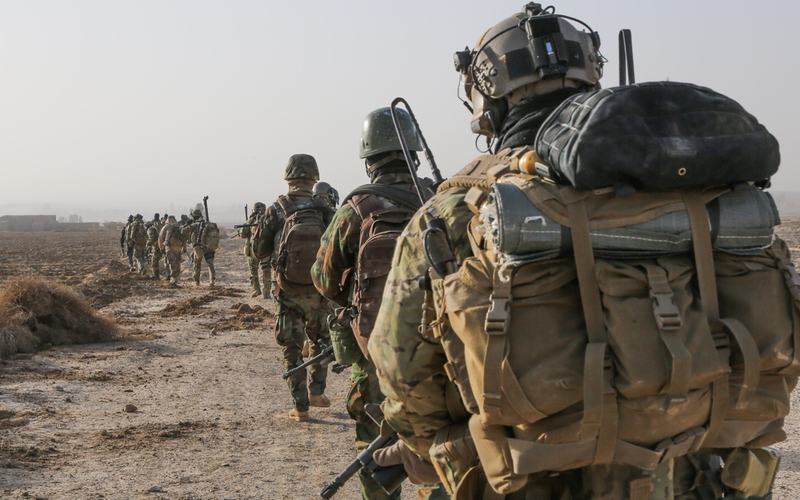
The U.S. Army recently conducted a large-scale battlefield burial exercise at Fort Bragg, North Carolina, testing procedures for handling mass casualties during a potential high-intensity military conflict.
The exercise, known as Operation Dragon Covenant, focused on establishing temporary burial operations under battlefield conditions, preparing military personnel for scenarios in which the number of casualties could overwhelm traditional recovery and identification systems.
The training reflects growing military attention to the logistical challenges of a major conflict, where large numbers of casualties could place enormous demands on medical facilities, transportation networks and personnel responsible for recovering and accounting for the dead.
Temporary battlefield burial operations are designed to provide a controlled process for handling fallen service members when immediate transportation to permanent facilities is not possible. Such procedures can involve documenting remains, recording identification information and maintaining records so that individuals can eventually be accounted for and properly laid to rest.
Conducting the exercise at Fort Bragg, now officially known as Fort Liberty, allowed Army personnel to practice these procedures in a controlled training environment before facing the demands of an actual emergency.
Operation Dragon Covenant underscores the Army's preparation for the possibility of future conflicts involving large-scale conventional warfare. While the exercise does not indicate that a major war is imminent, it demonstrates that military planners are considering the possibility of casualty levels and battlefield conditions that differ significantly from the conflicts American forces have experienced in recent decades.

Comments
No comments yet. Be the first to share your thoughts.