
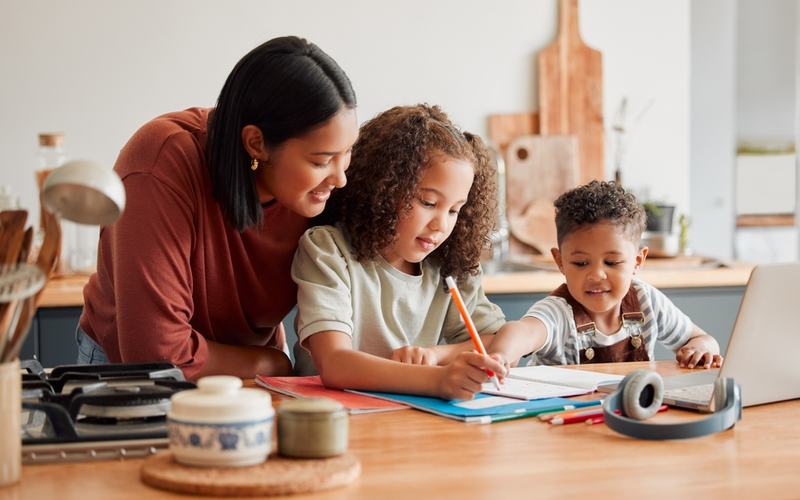
The number of children being homeschooled in New York has soared more than 200% over the past 15 years, as parents increasingly look outside traditional schools amid concerns about academic performance, crowded classrooms, and the quality of instruction.
New York had 53,905 homeschooled children during the 2025-26 school year, more than triple the number from 2009-10, according to state data analyzed by the New York Post. The figure represents the highest growth rate among all school sectors in the state. More than 14,000 of those students are in New York City alone.
Homeschooling has continued to accelerate recently. Since 2023, statewide homeschool enrollment rose nearly 8%, outpacing the 3.1% growth in charter school attendance.
Public schools in New York face ongoing challenges that appear to be driving the shift. A Success Academy Charter Schools analysis found that fewer than half of students passed math, reading, or both on state exams last year at 906 of New York City's more than 1,500 public schools. Statewide, New York spends about $37,000 per student—the highest amount in the world—yet trails states like Mississippi in reading and mathematics outcomes.
Zilvinas Silenas, president of the Empire Center for Public Policy, described the situation as a long-term decline. "For the past few decades, New York's schools have been in a death spiral of worsening performance and exploding costs," he said.
Parents cite multiple factors for choosing homeschooling. These include dissatisfaction with academic rigor, the desire for instruction tailored to individual children, and concerns over school environments. A New York Department of Education survey from 2025 indicated that 21% of parents opting for homeschooling believed it offered a higher level of rigor than public schools.
Total K-12 enrollment in New York has declined over the past decade, with traditional public schools losing students while charter, private, and homeschool options have gained share. Homeschooling now accounts for about 1.9% of the state's school-age population.
The trend reflects broader parental frustration with the performance of the nation's largest public school system and a growing preference for alternatives that allow more control over education.

Comments
No comments yet. Be the first to share your thoughts.