
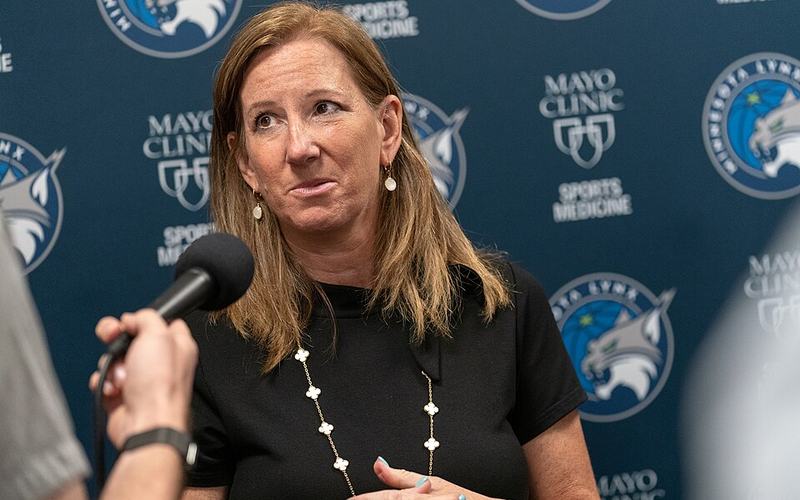
WNBA Commissioner Cathy Engelbert announced Friday that she will retire at the end of the 2026 season, ending her seven-year tenure as the league faces mounting criticism over its direction and handling of cultural issues.
Engelbert, 61, became the WNBA’s first commissioner in 2019 after serving as CEO of Deloitte. During her tenure, the league experienced substantial growth, including expanded media deals, higher player salaries, and plans to increase the league from 12 teams to 18 by 2030. NBA Commissioner Adam Silver praised Engelbert for overseeing what he called the most significant period of growth in the WNBA’s history.
Her departure, however, comes during one of the most contentious periods in recent WNBA history. The league has faced an intense debate over whether transgender athletes should be permitted to compete in women’s basketball, particularly after Indiana Fever guard Sophie Cunningham publicly argued that transgender women should not compete in women’s sports.
The WNBA responded by saying there were no immediate transgender-player eligibility issues and accused critics of engaging in what it called “bad-faith” efforts to use the issue to demean or marginalize others. Engelbert subsequently told reporters that people were attempting to use the league to “sow divisiveness” over the controversy.
Those comments drew additional criticism from opponents who argued that the league was dismissing legitimate concerns about protecting women’s sports. Cunningham also publicly suggested that the WNBA needed a “bold” commissioner who would put the interests of players first. Other players have questioned Engelbert’s relationship with athletes and her leadership of the league.
The controversy intensified in August when former NBA player Enes Kanter Freedom attended a WNBA game wearing a shirt stating, “WOMAN noun. adult human female.” He was later involved in a verbal confrontation with Chicago Sky guard Natasha Cloud and was banned from attending the team’s games. Kanter Freedom has since filed a federal lawsuit alleging that his First Amendment rights were violated.
Engelbert did not say that the cultural controversies were the reason for her retirement. In announcing her decision, she pointed instead to more than 40 years in business and said she was proud of the league’s growth during her tenure.
She will remain commissioner through the end of 2026 while the WNBA searches for her replacement.
Her successor will inherit a league that is significantly larger and more commercially successful than the one Engelbert took over, but also one facing questions about its cultural direction, leadership, and approach to contentious debates surrounding women’s professional sports.

Comments
No comments yet. Be the first to share your thoughts.