
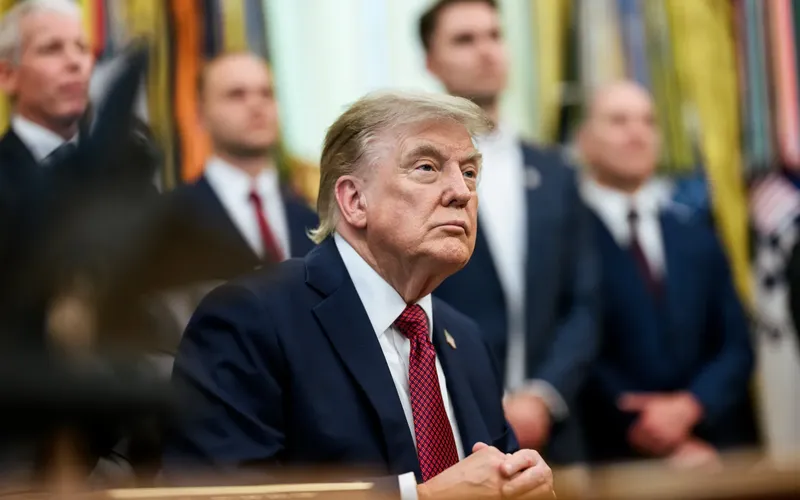
President Donald Trump said Monday that he would consider issuing preemptive pardons to administration officials and political allies if Democrats regain control of the House of Representatives and pursue investigations or criminal cases against members of his administration.
Trump made the comments during an interview with New York Post columnist Miranda Devine on her Pod Force One podcast, just one day before the 2026 midterm elections. Asked whether he would use the same strategy as former President Joe Biden, who issued a series of preemptive pardons before leaving office, Trump responded, “I would if I needed to. Sure.”
When Devine asked whether the protection would extend to everyone who had worked for him, Trump made clear he would not hesitate. “I would not even think about it. I'd do it. I did it for J6,” he said, referring to his decision to pardon approximately 1,500 people charged or convicted in connection with the January 6, 2021, Capitol attack shortly after returning to the White House in January 2025.
Trump also pointed to Biden’s final-hour pardons, which covered former White House medical adviser Dr. Anthony Fauci, retired Gen. Mark Milley, members and staff of the House committee investigating January 6, and several members of Biden’s family. Biden issued those pardons shortly before leaving office in January 2025, saying they were intended to protect the recipients from what he described as politically motivated investigations and prosecutions.
“That’s what Biden did. He gave everybody a pardon,” Trump said, criticizing the January 6 committee as corrupt and arguing that Biden had established a precedent for using presidential clemency to protect political allies.
The president’s remarks come as several prominent Democrats have discussed using congressional power to investigate Trump administration officials if their party wins control of the House. Sen. Elissa Slotkin (D-Mich.) said during an October appearance at the University of Chicago that Democrats should pursue what she called “signature cases” against individuals who enable Trump.
“I want that deterrence message sent,” Slotkin said, arguing that potential future administration officials should think twice before accepting positions in a Republican administration.
Rep. Jamie Raskin (D-Md.), who could become chairman of the House Judiciary Committee if Democrats take control, has also pledged to investigate what he describes as systemic corruption within the Trump administration. A Democratic House majority would have the authority to launch investigations, issue subpoenas and refer potential wrongdoing to federal authorities, although criminal prosecution itself remains the responsibility of law enforcement and prosecutors.
Trump also addressed suggestions that billionaire Elon Musk and other prominent administration allies could become targets of Democratic investigations or legal action. Devine raised the possibility of Musk being arrested or having his companies targeted.
“It won’t happen. It’s talk,” Trump responded. “But if it is talk, we’ll have to protect them.”
The president's comments reflect concerns among Republicans that a Democratic takeover of the House could lead to renewed congressional investigations into the administration and its allies. Trump has repeatedly accused Democrats of using government institutions to pursue political opponents, while Democratic lawmakers have argued that investigations would be necessary to hold the administration accountable.
There are, however, constitutional limits on the protection a president can provide through pardons. Under Article II, Section 2 of the Constitution, presidential clemency applies to federal offenses, not state criminal charges or civil lawsuits. A pardon also cannot prevent congressional impeachment proceedings. Any preemptive pardons Trump might issue would therefore offer protection only within the boundaries of his federal clemency authority.
The House elections take place Tuesday, Nov. 3, with control of the chamber at stake. If Democrats win a majority, they would gain control of committee leadership and investigative priorities for the remainder of the congressional term.

Comments
No comments yet. Be the first to share your thoughts.