
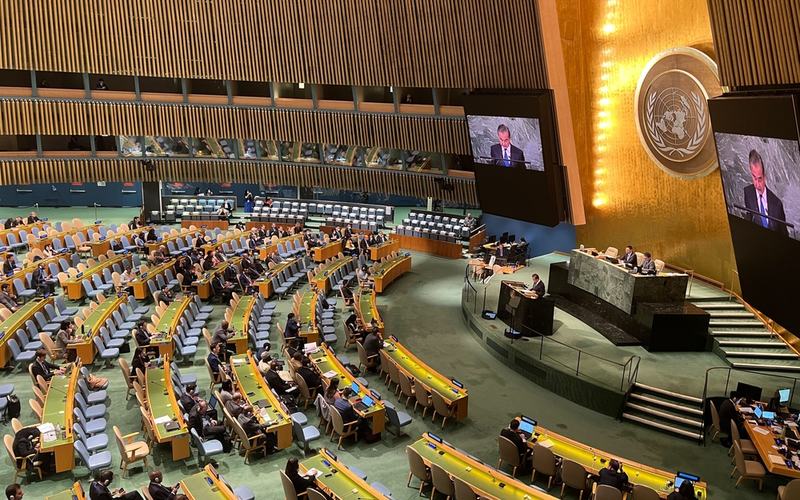
Around 80 countries called on Thursday for the urgent reopening of the Strait of Hormuz, issuing a joint condemnation of Iran's actions and renewed Houthi attacks across the Middle East.
The statement was delivered at the United Nations by Bahrain's Foreign Minister Abdullatif bin Rashid Al Zayani and was backed by Gulf Arab nations as well as major Western powers. The countries said Iran's actions in the strategic waterway were threatening international security and established rights to freedom of navigation.
The Strait of Hormuz is a critical passage for international maritime commerce and energy shipments. The coalition's demand comes as disruptions in the waterway continue to affect commercial shipping and as the broader regional conflict threatens additional maritime routes.
The countries also condemned the Iran-backed Houthis for resuming fighting in Yemen, carrying out attacks against Saudi Arabia and launching strikes in the Red Sea. The statement specifically warned that the Houthis' advance toward the Bab el-Mandeb Strait could further increase risks to international shipping, maritime security and global trade.
The two strategic waterways are closely connected to global commerce. Ships traveling between Europe and Asia through the Suez Canal must pass through the Red Sea and Bab el-Mandeb, while vessels moving through the Persian Gulf rely on the Strait of Hormuz.
The international demand comes as diplomatic efforts surrounding the Hormuz crisis continue. U.S. and Iranian negotiators are separately exploring a potential phased arrangement that could involve reopening the strait in exchange for changes to the U.S. economic blockade, according to Reuters.
The joint statement underscores the growing international pressure on Tehran to restore unrestricted maritime traffic. The countries warned that continued disruption would threaten not only shipping but also energy supplies and the wider global economy.
Iran and the Houthis have characterized their military actions as defensive, while the countries behind Thursday's statement argued that attacks and restrictions affecting commercial vessels cannot be used as leverage over international trade.

Comments
No comments yet. Be the first to share your thoughts.