
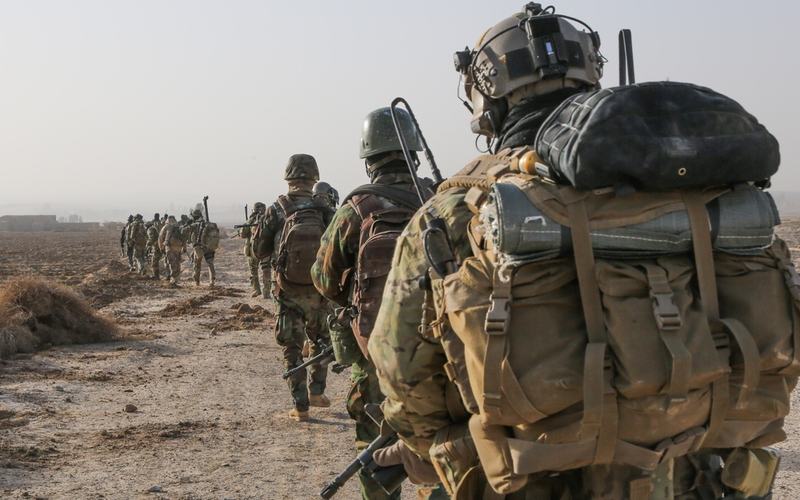
U.S. Army dental leaders have issued a stark warning that untreated toothaches and other dental emergencies risk sidelining soldiers and overwhelming limited medical evacuation assets during a future large-scale conflict.
The alert appears in the September-October 2026 issue of Military Review, the professional journal of the Army University Press. Authors including Col. Paul Colthirst and other senior dental officers argue that these conditions represent a "hidden casualty load" often overlooked in current training scenarios.
Dental emergencies can quickly render troops non-mission capable, the article states. Severe pain interferes with eating, clear thinking, and critical tasks such as operating weapons or making tactical decisions. Historical data shows dental issues have consistently affected readiness across conflicts, from the Korean War through operations in Iraq.
Recent studies cited in the piece report Army dental emergency rates as high as 264 cases per 1,000 personnel per year in deployed settings. Fractures, cavities, and stress-related pain rank among the leading causes. In past deployments, dental problems accounted for significant portions of disease and non-battle injuries, sometimes exceeding combat wounds at certain medical facilities.
Most major Army exercises do not incorporate dental emergencies into their casualty estimates, according to the authors. This omission leaves commanders with an incomplete picture of potential medical demands and triage needs in high-intensity fights against peer adversaries.
The leaders call for integrating dental planning into large-scale combat operations preparations. They recommend updating Department of Defense instructions on dental readiness categories to better prevent issues from reaching the point of emergency evacuation. Forward dental teams, they note, can often treat patients quickly and return them to duty, preserving combat power.
Dental readiness has shown mixed results in recent years. While the percentage of troops in the worst dental health category has declined, many service members still enter deployments with conditions that could flare under stress. The article emphasizes that proactive screening and treatment before deployment would reduce the burden on strained medical systems.
In multinational operations, dental concerns already rank as a top reason for casualty evacuation among partner forces. Army officials stress that similar patterns could emerge rapidly in any future conflict involving prolonged deployments.
The warning comes as the military focuses on preparing for potential fights that could involve mass casualties and contested logistics. Addressing preventable issues like dental emergencies, the authors conclude, is essential to maintaining overall force effectiveness.

Comments
No comments yet. Be the first to share your thoughts.