
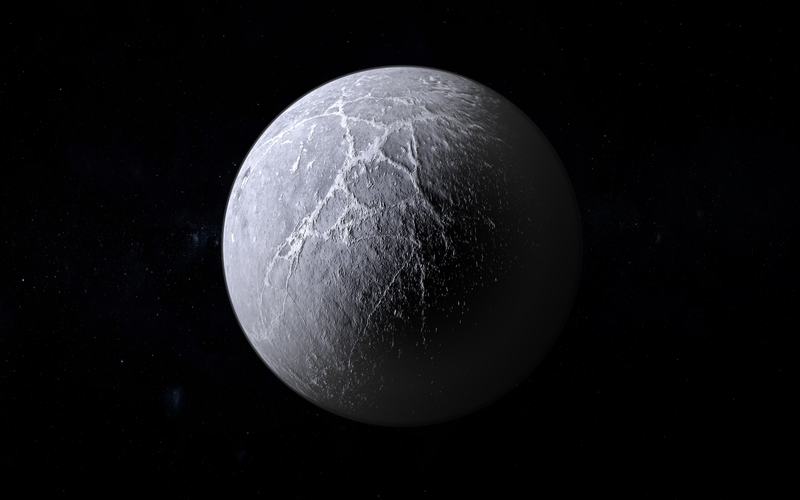
Astronomers have identified a rare green-colored white dwarf, challenging the familiar expectation that stars appear white, yellow, orange, or blue depending on their temperatures.
The star, designated WD J1330+6435, lies approximately 326 light-years from Earth. The discovery was detailed in a study titled White Dwarfs Really Are White, But Few Are Green, Pink or Vivid Blue, published in the journal RAS Techniques and Instruments. The research was led by Dr. Mark Hollands of the University of Warwick in England.
Researchers compared theoretical models of stellar spectra with observations collected by the Sloan Digital Sky Survey telescope in New Mexico to investigate the unusual colors.
A star’s apparent color generally reflects its surface temperature, with cooler stars tending toward orange and red hues and hotter stars appearing blue. White dwarfs, however, can develop unusual colors because of their extreme density and the distinctive chemical composition of their atmospheres.
In the case of WD J1330+6435, the star is drawing in and breaking apart rocky planetary bodies and asteroids orbiting nearby. This debris has contaminated its outer layers with elements including calcium, lithium and sodium.
The study found that sodium plays a particularly important role in producing the star’s green appearance. Under the extreme pressure of the white dwarf’s dense helium atmosphere, sodium absorbs a broad range of wavelengths, suppressing much of the orange, red and yellow light. With those warmer colors filtered out, the remaining visible light gives the star a greenish appearance.
The research also examined 151 white dwarfs within 65 light-years of Earth. The findings suggest that approximately one in 30 white dwarfs can display unusual colors because of changes in their chemical composition.
One example is WD J1011+2845, a white dwarf located about 48 light-years away in the constellation Leo Minor. Researchers identified its color as vivid salmon pink, attributing the appearance to convection that brings carbon from the star’s interior toward its surface, changing the light it emits.
Other white dwarfs can appear yellow or blue because of differences in atmospheric contamination and the interactions between particles in their outer layers. In some cooler white dwarfs, collisions between hydrogen molecules and helium atoms can also affect the spectrum of emitted light.
The findings demonstrate that even the remnants of stars that have exhausted their nuclear fuel can exhibit surprising physical and chemical properties, providing astronomers with additional clues about stellar evolution and the destruction of planetary systems.

Comments
No comments yet. Be the first to share your thoughts.