
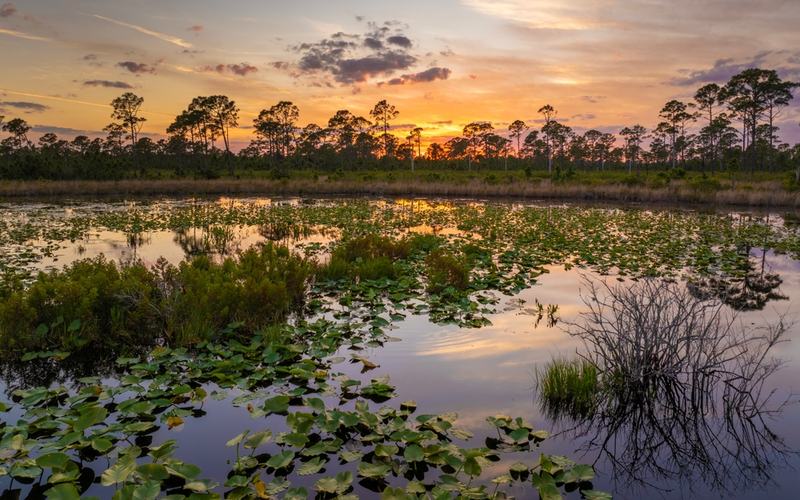
Florida Gov. Ron DeSantis and the state Cabinet have approved conservation measures protecting more than 55,000 acres of land from future development, continuing the state’s efforts to preserve natural habitats while keeping agricultural land productive.
The approvals, announced Nov. 19, include more than 50,000 acres of working agricultural land, along with properties that will protect wetlands, coastal areas and wildlife corridors. The projects advance Florida Forever, the Rural and Family Lands Protection Program and the Ocala-to-Osceola Wildlife Corridor.
The land conservation effort is valued at approximately $220 million. Much of the funding will be used to purchase permanent conservation easements, which restrict future residential and commercial development while allowing ranchers and farmers to continue operating their properties.
One of the most significant projects involves the 10,208-acre Hill Grade Tract in Hendry County, a working agricultural property included in the Wildlife Corridor Connector. The $46 million conservation easement will help connect protected lands across South Florida and safeguard natural areas that are important to the survival of the federally endangered Florida panther.
The property is primarily used for vegetable and row-crop production. Its preservation will help maintain a critical link between existing agricultural and natural lands, while protecting resources connected to the Everglades ecosystem and Everglades National Park.
Other major conservation projects include Osceola Prairie, a nearly 19,312-acre cattle and farming operation in Osceola County. The $77.75 million easement will protect land within the Kissimmee River Basin and Northern Everglades ecosystem. The U.S. Department of Defense is contributing $15 million toward the project because the property is located near Avon Park Air Force Range.
The Cabinet also approved a $33.3 million easement covering approximately 6,058 acres of Spanish Trails ranchland in Charlotte and DeSoto counties. The property supports cattle operations, watermelon production, and hay farming, while containing hundreds of acres of wetlands and natural waterways.
Another 7,000-acre ranch in DeSoto and Hardee counties will be preserved through an easement valued at approximately $33.8 million. The property contains pastureland, native forests and extensive wetland systems that contribute to the region’s natural landscape.
The approvals also include the protection of nearly 4,700 acres of timberland in Alachua County and more than 3,300 acres in Leon County. These properties will help connect existing conservation areas, protect water resources, and preserve working lands from future development.
In addition to the agricultural easements, Florida approved a 4,763-acre conservation easement in Putnam County that will help connect protected lands stretching from southern Alachua County toward the Ocala National Forest. The property includes wetlands that provide water storage and habitat for wildlife.
The state also approved the acquisition of 30 acres at the northern end of Clearwater Beach Island in Pinellas County to expand Caladesi Island State Park. The $20.5 million acquisition will protect one of the county’s remaining undeveloped coastal areas, including dunes, mangrove swamps and habitat used by nesting sea turtles and shorebirds.
DeSantis said the approvals reflect his commitment to preserving Florida’s natural resources and open spaces for future generations. Agriculture Commissioner Wilton Simpson emphasized that the state can protect its environment while allowing farms and ranches to remain privately owned and productive.
The latest approvals add to Florida’s broader conservation effort. The state says it has committed more than $2.6 billion to Florida Forever and the Rural and Family Lands Protection Program, helping preserve hundreds of thousands of acres of land since 2019.
By protecting large connected tracts of land, Florida’s conservation programs aim to limit development pressure, preserve agricultural operations, and maintain wildlife habitat as the state continues to grow.

Comments
No comments yet. Be the first to share your thoughts.