
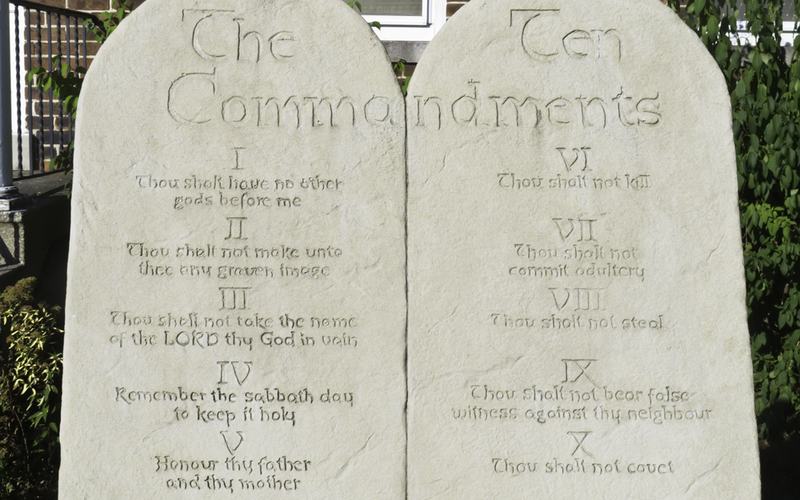
Texas Attorney General-elect Nathan Johnson, a Democrat who defeated Republican Mayes Middleton in the Nov. 3 election, has announced he will not defend the state’s law requiring the Ten Commandments to be displayed in public school classrooms, signaling a sharp reversal from the legal position taken by outgoing Republican Attorney General Ken Paxton.
Johnson, a Dallas state senator and corporate litigator, told The Dallas Morning News that he considers Senate Bill 10 unconstitutional. Although he acknowledged that the courts will ultimately determine the law’s constitutionality, Johnson said he will establish the state’s legal position when he takes office in January.
“My jurisprudential opinion is that the law is unconstitutional,” Johnson said. He added that the state’s position “will not be the position the state has previously taken.”
The law, signed by Republican Gov. Greg Abbott and enacted in 2025, requires every Texas public school classroom to display a poster or framed copy of the Ten Commandments in a conspicuous location. Displays must be at least 16 inches wide and 20 inches tall, and schools are required to accept donated copies or may purchase them using district funds.
Supporters of the measure argue that the Ten Commandments are an important part of America’s religious, moral and legal heritage. The law does not require students to recite the commandments or affirm religious beliefs.
The statute has already survived a major legal challenge. In April, the full 5th U.S. Circuit Court of Appeals ruled 9-8 that Senate Bill 10 did not violate the First Amendment’s Establishment Clause or its protections for religious exercise. The decision reversed a lower court ruling that had blocked the displays in several Texas school districts.
Paxton, whose office defended the law, celebrated the appeals court decision as “a major victory for Texas and our moral values.”
However, a group of Texas families, including Rabbi Mara Nathan, appealed the ruling to the U.S. Supreme Court in August. The families argue that requiring the biblical text in public school classrooms violates students’ religious freedom.
The Supreme Court is scheduled to consider the petition during its Dec. 11 conference, when justices will decide whether to take up the case. If the court declines to hear the appeal, the 5th Circuit’s ruling will remain in place.
Johnson’s refusal to defend the law has already become a factor in the legal dispute. In a Nov. 10 filing, Paxton’s office urged the Supreme Court not to accept the case, arguing that the incoming attorney general’s opposition could leave the court without a state attorney willing to defend the statute.
The filing described the recent election as making the case “a particularly poor vehicle” for Supreme Court review because Johnson could decline to present the state’s existing legal arguments.
Johnson has said Texas would need to hire outside attorneys if the state wanted to continue defending the law. During his campaign, he told CBS News Texas that the state would have to bring in private lawyers “if they want to defend unconstitutional laws.”
The incoming attorney general’s position places the future of the law’s defense in doubt, even though the statute remains in effect and has been upheld by the federal appeals court.
The dispute also has implications beyond Texas. Louisiana and Arkansas have passed similar laws requiring Ten Commandments displays in public schools, and courts have reached different conclusions about their constitutionality. A Supreme Court decision could establish a nationwide precedent affecting those measures and future efforts by states to recognize the country’s religious and historical foundations in public education

Comments
No comments yet. Be the first to share your thoughts.