
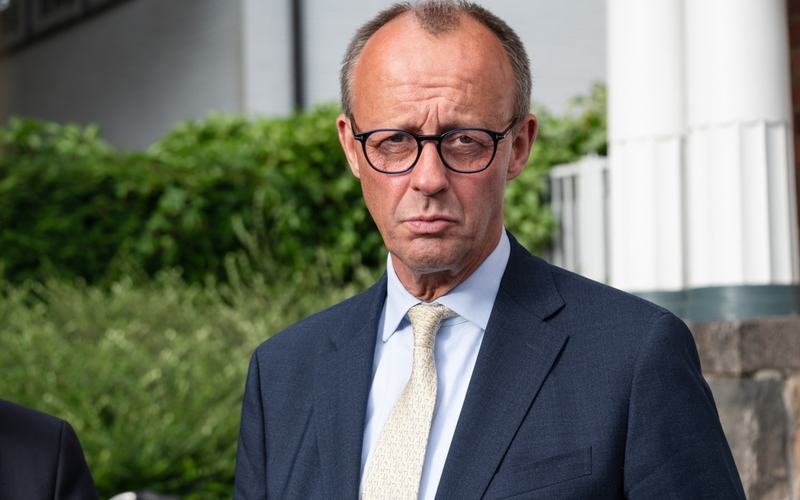
German Chancellor Friedrich Merz warned Thursday that European nations are preparing for potentially serious Russian hybrid attacks as Moscow escalates its warnings over NATO and the war in Ukraine.
Merz said European governments are preparing for additional Russian operations that could include cyberattacks, sabotage and other forms of hybrid warfare.
“We are preparing for further hybrid attacks, including severe ones,” Merz said during a ceremony honoring NATO with the Westphalian Peace Prize. “Should they occur, we would respond quickly and very clearly.”
European governments have increasingly accused Russia of using covert and disruptive operations against Western countries as the war in Ukraine continues. Germany has also blamed Russia for an attempted attack involving an explosives-equipped drone discovered near a Ukrainian cargo aircraft at Leipzig/Halle Airport in August.
Merz described the reported Russian activity as evidence of what he characterized as Moscow’s desperation over the war in Ukraine. He also reaffirmed Germany’s support for Ukraine and called for European unity in responding to Russian pressure.
The warning came as Russian President Vladimir Putin issued a separate warning to NATO over the Baltic exclave of Kaliningrad.
Speaking at the Valdai Discussion Club in Moscow on Thursday, Putin said a direct attack on Russian territory, including Kaliningrad, would raise the question of using “all weapons” available to Russia.
Putin said Russia does not intend to attack European countries and characterized his warning as a response to what Moscow considers escalating Western pressure.
Kaliningrad is a Russian territory located between NATO members Poland and Lithuania. Russia recently sent a warning to NATO alleging that the alliance was preparing to isolate or blockade the region. NATO has rejected that allegation and said it has no intention of targeting Kaliningrad.
NATO Secretary-General Mark Rutte responded by emphasizing that the alliance is defensive and calling on Moscow to stop its nuclear rhetoric.
“Stop the nuclear threat,” Rutte said, describing the rhetoric as “absolutely not called for and not helpful.” He also urged Russia to end its war against Ukraine.
Putin, meanwhile, warned that continued escalation could push the confrontation toward what he described as a dangerous point. He argued that Russia was responding to Western actions rather than attempting to intimidate NATO.
The competing warnings come as European governments continue strengthening security measures against suspected Russian hybrid operations while NATO maintains its military presence along its eastern flank.
The statements also underscore the widening range of tensions between Russia and NATO, from cyber and sabotage allegations to military exercises and increasingly direct warnings involving Russia’s nuclear arsenal.

Comments
No comments yet. Be the first to share your thoughts.