

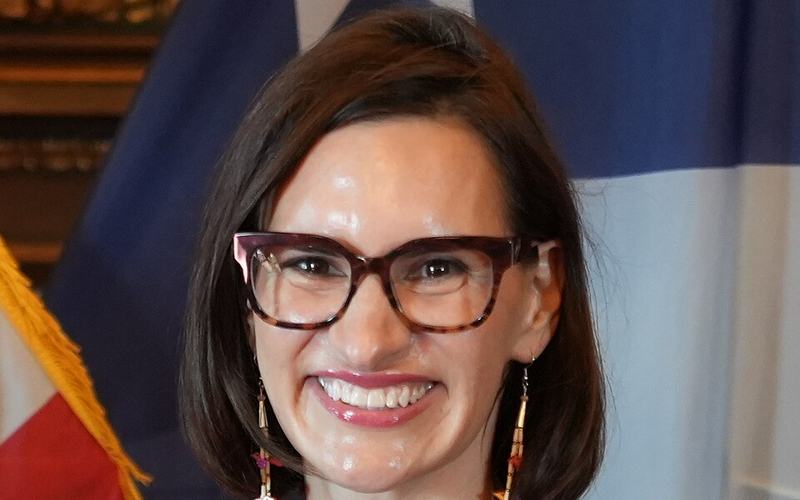
Democratic-Farmer-Labor Lt. Gov. Peggy Flanagan won Minnesota’s open U.S. Senate seat on Tuesday, the Associated Press projected, defeating Republican Michele Tafoya and securing a Democratic hold that contributes to the party’s projected majority in the chamber.
The seat was vacated by retiring Democratic Sen. Tina Smith. Flanagan, who has served as lieutenant governor since 2019 under Gov. Tim Walz, led in most public polls throughout the general election cycle after winning a competitive Democratic primary in August against U.S. Rep. Angie Craig. With roughly three-quarters of precincts reporting, Flanagan held a lead of about 11 points, consistent with the Associated Press call.
Flanagan, a member of the White Earth Nation, becomes the first Indigenous woman elected to the U.S. Senate. She previously served on the Minneapolis School Board and in the Minnesota House of Representatives. In the primary, she ran as a progressive, emphasizing opposition to corporate political spending, support for expanded health care access, and a more confrontational approach to the Trump administration. She received endorsements from Sens. Bernie Sanders and Elizabeth Warren, as well as the retiring Smith.
Tafoya, a former NFL sideline reporter and conservative commentator, won the Republican primary and received an endorsement from President Donald Trump in the final weeks of the campaign. She sought to make the race a referendum on state government issues during Flanagan’s time as lieutenant governor, including fraud scandals in Minnesota social services programs, while also criticizing national Democratic policies. Tafoya presented herself as a political outsider focused on fiscal accountability and immigration enforcement. The race drew significant attention as one of the few Democratic-held seats Republicans hoped to contest seriously in a cycle that otherwise favored Democrats.
Minnesota has not elected a Republican to the Senate since 2002, and the state has not supported a Republican presidential candidate since 1972. While some late polls showed a narrower race than earlier surveys, Flanagan maintained a consistent lead. The contest was rated lean or likely Democratic by major forecasters heading into Election Day.
The result was widely expected and adds to the Democratic gains already projected in other states. With pickups in Ohio, Kansas, Iowa, North Carolina, Texas, and South Carolina, along with holds such as Minnesota, Georgia, and New Hampshire, Democrats are projected to secure control of the Senate after entering the night with a 47-seat minority. The party needed a net gain of four seats to reach the majority threshold, given Vice President JD Vance’s ability to break a 50-50 tie.
Control of the Senate will determine which party organizes the chamber and confirms presidential nominees for the final two years of Trump’s term.

Comments
No comments yet. Be the first to share your thoughts.