
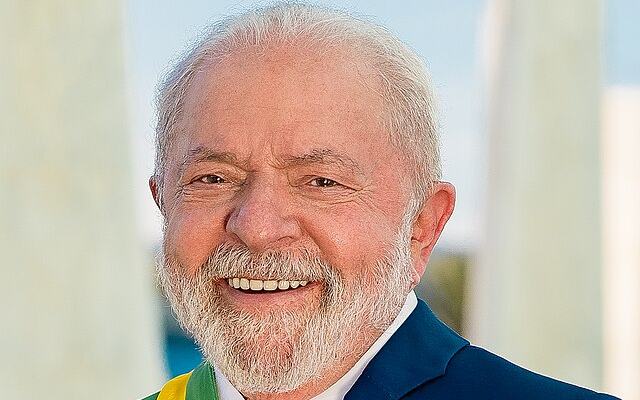
Brazilian President Luiz Inácio Lula da Silva and Senator Flávio Bolsonaro remain locked in a statistical tie in the latest polls ahead of the first round of the presidential election on Sunday. Multiple surveys released in recent days place the two frontrunners within the margin of error in simulated runoff scenarios, setting up what could be one of the closest contests in recent Brazilian history.
An AtlasIntel poll conducted between September 23 and 28 showed Flávio Bolsonaro with 47.7 percent support against Lula's 47.6 percent in a hypothetical second round. Earlier Atlas surveys had shown similar near-even results, with the right-wing candidate holding slight numerical edges at times. A Datafolha survey from September 29 to October 1 gave Lula a 48 percent to 45 percent advantage in a runoff, though that gap also fell within the poll's two-point margin of error.
In first-round scenarios, Lula typically leads with support in the low 40s, followed closely by Flávio Bolsonaro in the high 30s. Other candidates, including writer Augusto Cury and former Goiás governor Ronaldo Caiado, trail far behind and are unlikely to advance. If no candidate secures more than 50 percent of valid votes on October 4, the top two will meet in a runoff on October 25.
The tight race reflects growing voter concerns over the economy under Lula's administration. Recent polls have captured signs of unease despite government welfare expansions, with the conservative challenger benefiting from his association with the political right and his father Jair Bolsonaro's base. Jair Bolsonaro remains imprisoned following convictions related to efforts to challenge the 2022 election results.
Flávio Bolsonaro, running on the Liberal Party ticket, has positioned himself as a market-friendly alternative focused on fiscal discipline and law-and-order priorities. Lula, seeking a fourth non-consecutive term with the Workers' Party, has emphasized social programs and his record on poverty reduction.
Voters abroad will also play a role in the outcome, with overseas ballots counted alongside domestic results. The final days of campaigning have featured rallies in key states as both sides seek to mobilize their bases before Sunday's vote. Turnout and undecided voters, estimated in the single digits in recent surveys, could prove decisive in the narrow contest.

Comments
No comments yet. Be the first to share your thoughts.