
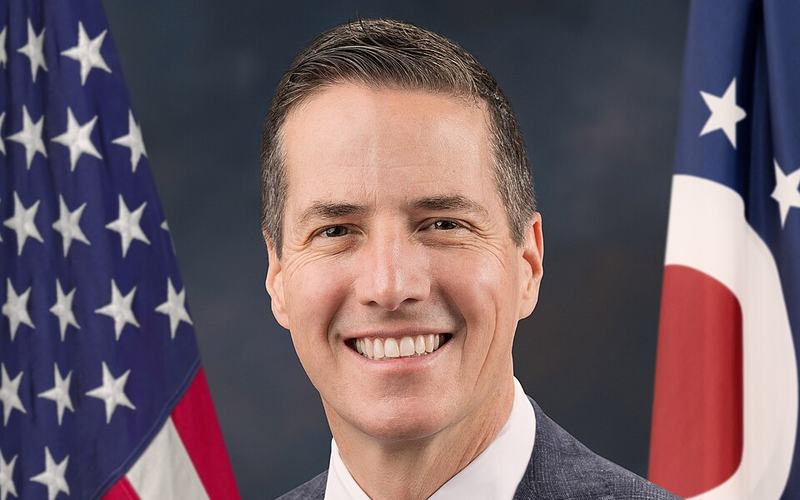
Sen. Bernie Moreno, R-Ohio, announced Tuesday that he plans to introduce legislation expanding President Donald Trump’s tax-advantaged Trump Accounts program to Americans younger than 40, potentially extending the initiative well beyond its current focus on children.
Moreno described the proposal as a major opportunity for working Americans to build financial security, citing potential uses that include purchasing homes, paying off student loans, and investing for the future.
“This is a game-changer, and I'll lead the bill in the Senate to make it happen,” Moreno wrote in a post on X, responding to reports that the program could be expanded.
“Trump Accounts are already transforming lives for families across America. Raising the age limit will give hardworking Americans powerful new tools to buy homes, wipe out student debt, and invest in their own futures,” he added.
The proposal would build on the investment program established through Trump’s One Big Beautiful Bill Act, which the president signed into law in July 2025. Under the existing framework, Trump Accounts are available to Americans younger than 18, with children born between 2025 and 2028 eligible to receive a $1,000 federal contribution.
The accounts are designed to grow through investments over time, with additional contributions permitted from families, employers, and private donors. When beneficiaries turn 18, their accounts transition into traditional individual retirement accounts, allowing them to continue building savings for the future.
Expanding eligibility to adults under 40 could open the program to millions of Americans who currently cannot participate. Supporters argue that providing access to investment accounts at an earlier stage of adulthood could help people accumulate assets while giving employers, businesses and philanthropists another way to support long-term financial stability.
Brad Gerstner, CEO of Altimeter Capital and one of the leading architects of Trump Accounts, said Wednesday that congressional legislation would be necessary to expand the program. He argued that the government could make the accounts available to younger adults without providing additional federal seed money.
“Why not pull forward 20 years of IRAs? We can create all of those today, everybody under 40,” Gerstner said during an appearance on CNBC.
He emphasized that the proposed expansion would focus on establishing the accounts rather than extending the government's initial financial contributions.
“We're not putting money in them from the government,” Gerstner said. “But you just create the account so that they can get saving, too.”
Under that approach, employers, wealthy donors and businesses could contribute to accounts for younger adults, giving them another avenue to build investment portfolios without requiring the federal government to provide a new round of seed funding.
Trump confirmed Tuesday that his administration was considering a separate version of the program designed for adults, acknowledging that expanding the initiative beyond children would involve different considerations.
“We are looking at something different, because it is somewhat of a different thing, having to do with adults,” Trump told reporters, according to The Hill.
The existing program has already attracted significant private-sector backing. Michael Dell, founder of Dell Technologies, and his wife, Susan Dell, committed $6.25 billion to provide $250 contributions to accounts for 25 million children living in qualifying ZIP codes.
Elon Musk has also announced plans to give one SpaceX share to every American child next year. Trump confirmed that the contributions would be made through Trump Accounts, potentially adding another source of investment capital for eligible families.
Supporters of the proposed expansion believe similar participation from companies and private donors could help younger adults establish savings and gain greater access to long-term investment opportunities. The ability to begin investing earlier could be particularly valuable for people who have limited savings while managing housing costs, student loans and other expenses.
However, the proposal remains in its early stages. Its precise legislative structure, potential costs and prospects for passage have yet to be determined. Although Gerstner has outlined a model that would not require additional federal seed contributions, lawmakers would still need to establish the rules governing eligibility and account administration.
The Senate is scheduled to return from its recess on November 9, following the midterm elections. Moreno’s legislation could provide an early test of whether Republicans are prepared to broaden one of Trump’s signature financial initiatives beyond children and extend its investment-focused approach to younger working Americans.

Comments
No comments yet. Be the first to share your thoughts.