
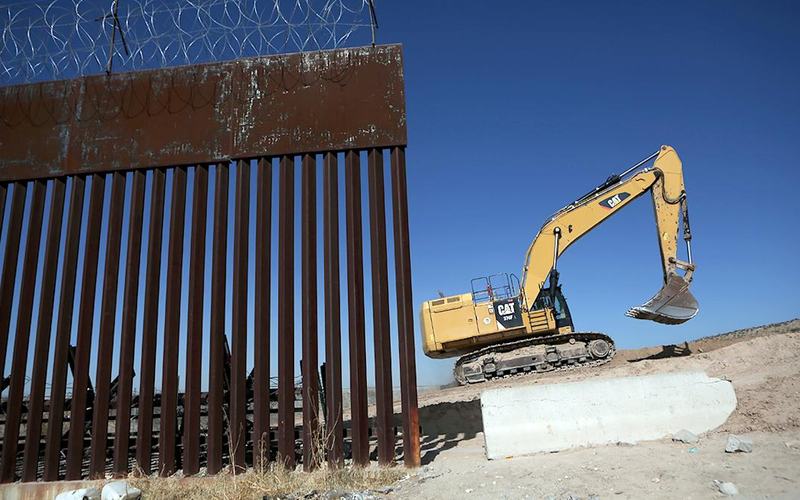
The Trump administration asked the U.S. Supreme Court on Wednesday to allow construction of border barriers to resume in Texas’s Big Bend region, challenging a lower court ruling that halted work on part of President Donald Trump’s border security initiative.
The administration filed an emergency appeal seeking to overturn the construction pause while litigation continues. The dispute centers on the federal government’s authority to bypass certain environmental and other regulations to accelerate border wall construction in areas it considers vulnerable to illegal immigration.
U.S. District Judge Kathleen Cardone, appointed by former President George W. Bush, ordered the government on October 2 to suspend construction across the roughly 500-mile project area while the legal challenge proceeds. The ruling dealt a setback to one of Trump’s signature priorities as his administration works to expand border infrastructure along the U.S.-Mexico border.
The Big Bend project includes a combination of steel barriers, vehicle barriers and surveillance technology. Construction has faced opposition from ranchers, local residents, business owners and environmental groups, who argue that the remote region has historically experienced relatively low levels of illegal immigration and that the project could damage its distinctive landscapes.
Opposition intensified in August after bulldozers were spotted clearing land in Big Bend National Park. The preliminary injunction halted construction not only in the park but also on land upstream and downstream owned by private landowners or the state.
At the center of the legal dispute are broad waivers signed by the secretary of Homeland Security. Those waivers allow U.S. Customs and Border Protection to bypass environmental and other legal requirements that could otherwise delay construction.
The administration argues that federal law gives the Homeland Security secretary extensive authority to waive regulations when necessary to build physical barriers and roads near the border. It points to legislation dating to 1996 that grants such powers to help prevent illegal crossings.
Government officials also contend that the Big Bend sector could become a more attractive route for illegal immigration if it remains one of the few stretches of the southern border without substantial barriers or other infrastructure. From the administration’s perspective, completing the project would help prevent migrants from exploiting gaps in border defenses.
Opponents dispute the administration’s interpretation of federal law. They argue that Congress intended the waiver authority to apply specifically to areas experiencing high levels of illegal entry, a description they say does not fit the rugged and sparsely populated Big Bend region.
Critics have also questioned the cost and effectiveness of the planned construction. Some argue that surveillance towers, drones and other monitoring systems could provide comparable security at a lower cost while avoiding damage to the region’s environment and scenery.
Trump has long pledged to build a border wall along the approximately 2,000-mile U.S.-Mexico border. Last summer, congressional Republicans allocated $46 billion to the Department of Homeland Security to complete the broader project, which combines 30-foot-tall steel bollard walls, vehicle barriers and surveillance systems.
The Supreme Court’s response to the emergency appeal could determine whether construction resumes while the underlying legal challenge moves forward. For the administration, the dispute is part of a wider effort to expand physical border defenses and prevent illegal immigration.

Comments
No comments yet. Be the first to share your thoughts.