
NASA announced Saturday that it has selected eight private companies to compete for future lunar cargo delivery missions under a new 10-year contract framework with a combined maximum value of $10 billion.
The Commercial Lunar Payload Services Phase 2, or CLPS 2, is an indefinite-delivery/indefinite-quantity master contract that will govern task orders through 2036. The companies will deliver science payloads, technology demonstrations, and infrastructure elements such as habitat modules and power systems to the lunar south pole.
The selected firms are Blue Origin, Firefly Aerospace, Intuitive Machines, ispace-U.S., Lockheed Martin Space, Northrop Grumman Space Systems, SpaceX, and Voyager Technologies. NASA described the $10 billion figure as a ceiling rather than a guaranteed award amount.
Alongside the new framework, the agency raised the funding ceiling on its existing CLPS contract from $2.6 billion to $4.2 billion and extended operations through November 2033. NASA Administrator Jared Isaacman stated that the agency is building the Moon Base mission by mission, with astronauts arriving to find initial infrastructure already in place.
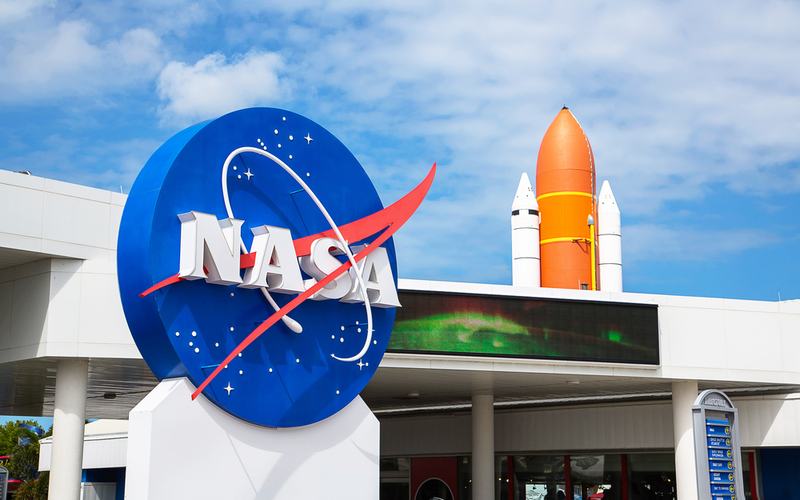
The announcement occurred at the MAX POWER aerospace expo at Kennedy Space Center in Florida. It aligns with broader efforts to leverage commercial partners for sustained lunar presence ahead of crewed Artemis missions.
NASA also awarded Blue Origin a separate $94 million base contract, with up to $140 million in performance incentives, to deliver a nuclear-powered rover called PROMISE to the lunar south pole.
The approach emphasizes competition among American aerospace firms to reduce costs and accelerate development of lunar infrastructure through private sector innovation. Multiple task orders are expected in the coming years to preposition equipment and supplies for long-term operations. This builds directly on earlier CLPS deliveries that have already demonstrated reliable commercial access to the lunar surface.

Comments
No comments yet. Be the first to share your thoughts.