
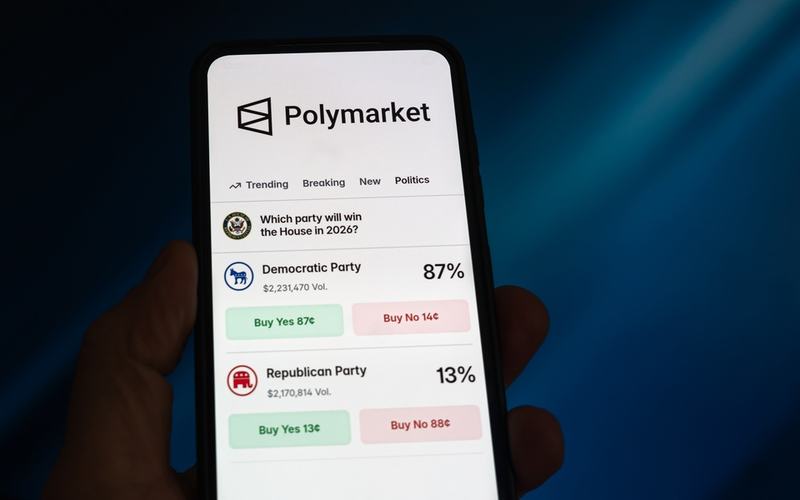
New York Attorney General Letitia James sued Polymarket on Thursday, accusing the prediction market platform of operating an illegal gambling business without a state license and asking a judge to halt its operations in New York.
The lawsuit seeks civil fines, forfeiture of what the state describes as illegal gains and restitution for customers. New York officials also allege that Polymarket allows people ages 18 to 20 to participate in its markets even though state law requires users to be at least 21 for mobile sports betting.
Polymarket allows users to buy and sell contracts tied to the outcome of events, including sporting events, elections and other real-world developments. The company argues that its markets function differently from traditional gambling because users trade contracts against one another and prices are determined by market activity.
Polymarket Chief Legal Officer Neal Kumar rejected New York's action, saying the company had attempted to work with state officials and would defend the platform in court. He also emphasized that Polymarket was founded in New York and now employs more than 350 people in the state.
The lawsuit centers on a larger dispute over who has authority to regulate prediction markets. New York argues that Polymarket's contracts fall under the state's gambling laws and require approval from the New York State Gaming Commission. Prediction market companies, meanwhile, have argued that their event contracts are financial products subject to federal oversight by the Commodity Futures Trading Commission.
New York has already taken similar action against other companies. James sued rival prediction market Kalshi in July and previously brought cases against Coinbase and Gemini over their prediction-market operations. The growing number of lawsuits has intensified the legal battle between states seeking to regulate the platforms and federal authorities asserting jurisdiction over the industry.
The dispute could have consequences beyond New York. If courts ultimately determine that prediction markets are subject to state gambling laws, platforms could face licensing requirements and other restrictions across the country. If federal regulators prevail in asserting exclusive authority, states could have less ability to regulate the rapidly expanding industry under their own gambling laws.

Comments
No comments yet. Be the first to share your thoughts.