
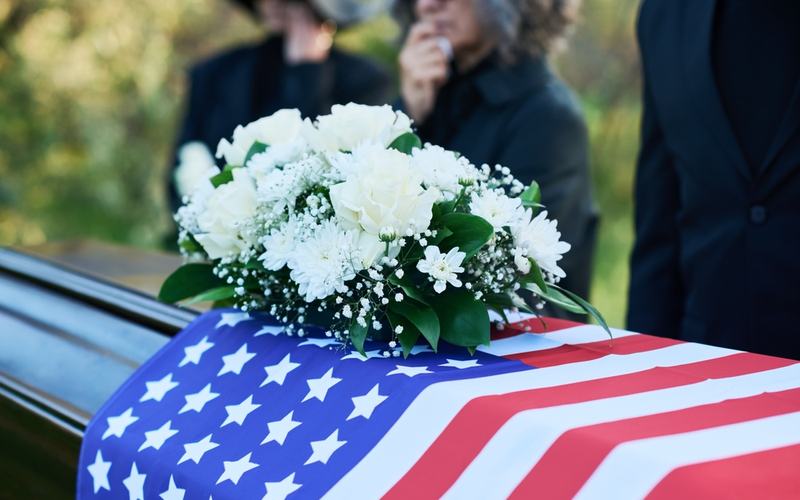
The Pentagon has identified Capt. Bianca C. Wilkerson, a 37-year-old Army officer from Norfolk, Virginia, as the 19th U.S. service member to die in the Middle East since the Trump administration launched military operations against Iran on Feb. 28.
Wilkerson died Sept. 18 in what the Army described as a noncombat-related incident. A defense official said she suffered a medical emergency aboard a military flight traveling toward Saudi Arabia. Her death remains under investigation, and an autopsy is pending.
Wilkerson was assigned to Headquarters, U.S. Army Central and Third Army at Shaw Air Force Base in South Carolina and had been deployed to Doha, Qatar, in support of overseas operations. She was posthumously promoted to major.
The Pentagon now publicly acknowledges 19 American military deaths connected to operations in the Middle East since the war began Feb. 28.
Beyond the human toll, the conflict has become a major financial commitment for the United States. U.S. Central Command estimated that military operations had cost $43.6 billion through Sept. 3, with more than $28 billion of that amount going toward replacing expended weapons and munitions.
The Congressional Budget Office has projected that maintaining the current level of operations could require another $2 billion to $3 billion each month, depending on the intensity of the fighting. The prolonged campaign has also depleted portions of the U.S. stockpile of advanced missile-defense interceptors and other weapons.
The financial and military costs are becoming an increasingly prominent issue as the Nov. 3 midterm elections approach. Some Republican candidates in competitive races have called for the conflict to end, citing the impact of the war on energy prices and household costs.
President Donald Trump has rejected the suggestion that the elections are influencing his strategy toward Iran. He has nevertheless said he expects the conflict to end shortly after the midterms and accused Tehran of attempting to prolong the war until after Americans vote.
Trump defended the decision to confront Iran during remarks at the United Nations this week while leaving the door open to negotiations. Secretary of State Marco Rubio has similarly said Trump could meet with Iranian President Masoud Pezeshkian if diplomacy can help bring the confrontation to an end.
The administration has also continued applying economic pressure to Tehran. In August, it launched “Operation Economic Outcast,” a sanctions campaign designed to further isolate Iran financially as the administration seeks to force the conflict toward an end.

Comments
No comments yet. Be the first to share your thoughts.