
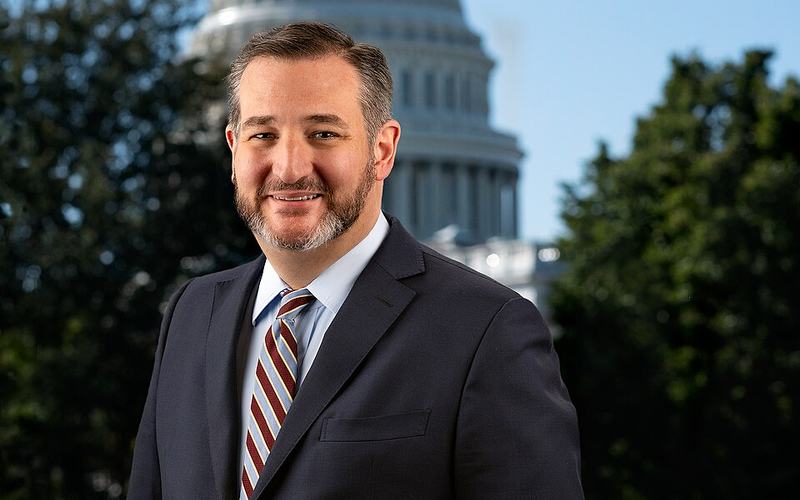
Sen. Ted Cruz (R-Texas) sharply criticized Democratic Senate nominee Abdul El-Sayed on Monday, focusing on a controversial political advertisement that links American military assistance to Israel with the rising cost of groceries. Cruz described the commercial as antisemitic and accused El-Sayed of failing to adequately condemn its message, escalating a dispute that has become a major point of division in Michigan’s closely contested Senate race.
Speaking on his Verdict with Ted Cruz podcast, co-hosted by Ben Ferguson, Cruz took aim at the advertisement produced by Rebellion PAC, an outside political group founded by progressive commentator Cenk Uygur. The commercial features a couple shopping for groceries who complain about the cost of food before suggesting that American support for Israel is responsible for their financial difficulties.
Cruz called it one of the most vicious antisemitic advertisements he had seen, arguing that it unfairly directs public frustration over household expenses toward Israel and Jewish people. He also pointed to Uygur’s family connection to controversial political streamer Hasan Piker, who has faced repeated criticism over remarks about Israel and Jewish people.
The advertisement has drawn criticism from Jewish community leaders and Democratic officials, including Rep. Haley Stevens (D-Mich.), who narrowly lost the Democratic Senate primary to El-Sayed. Rebellion PAC is independent of El-Sayed’s campaign, and his spokeswoman previously said the advertisement was not affiliated with the campaign. El-Sayed also stated Saturday that he did not agree with its contents, though the dispute continued over whether he had sufficiently condemned the message.
Cruz broadened his criticism to allegations that El-Sayed has connections to the Muslim Brotherhood, an Islamist organization. The Texas senator argued that the candidate’s public statements, writings and reported family connections raise questions about his political associations and the possibility of receiving access to classified information if elected to the Senate.
El-Sayed has repeatedly denied having personal or family ties to the Muslim Brotherhood. In an October interview, he rejected the allegations when asked directly about claims involving relatives. Republicans, including Cruz, have continued to challenge those denials, while El-Sayed has characterized the accusations as attacks directed at him because of his Muslim faith and political positions.
Cruz also criticized CBS News anchor Margaret Brennan and NBC News host Kristen Welker over their interviews with El-Sayed and coverage of the controversy. He argued that the networks had failed to adequately examine the allegations he raised, particularly his concerns about the possibility of El-Sayed receiving a security clearance and serving on the Senate Intelligence Committee.
Cruz insisted that his criticism was directed at what he described as El-Sayed’s political ideology and alleged associations, not his religious beliefs. He said he would defend El-Sayed’s right to practice Islam while maintaining that questions about political organizations and national security should be examined independently of religion.
The dispute intensified Sunday when Stevens announced that she was endorsing Republican Senate nominee Mike Rogers, abandoning her earlier pledge to support the Democratic nominee after losing the primary. Stevens had publicly demanded that El-Sayed condemn the Rebellion PAC advertisement and expressed concern about his association with Piker.
Stevens had been expected to appear with El-Sayed and other Democratic officials at a campaign event in Detroit. Instead, she attended a church service with Rogers and announced her endorsement, saying El-Sayed had made clear that she was no longer welcome in his campaign. Rogers welcomed her support, while El-Sayed dismissed the development and said he remained focused on voters and policy issues.
Cruz praised Stevens’ decision, describing it as a break from party loyalty in favor of personal principle. He argued that her endorsement could resonate with Jewish voters, moderates and Democrats uncomfortable with the controversy surrounding El-Sayed.
The endorsement also triggered a sharp response from Democratic leaders. Senate Minority Leader Chuck Schumer (D-N.Y.) called Stevens’ decision a “despicable betrayal,” while other Democrats criticized her for supporting Rogers, who is seeking to defeat El-Sayed and win the seat being vacated by retiring Democratic Sen. Gary Peters.
Cruz responded by accusing Schumer and former House Speaker Nancy Pelosi (D-Calif.) of prioritizing political power over principle. He argued that Stevens’ decision reflected the divisions within the Democratic Party as the Michigan contest approaches Election Day.
Michigan voters will decide the Senate race Tuesday, Nov. 3, with the contest carrying national significance as Republicans and Democrats compete for control of the chamber. The public dispute over Israel, antisemitism and El-Sayed’s alleged political associations has added another major controversy to the final days of the campaign.

Comments
No comments yet. Be the first to share your thoughts.