
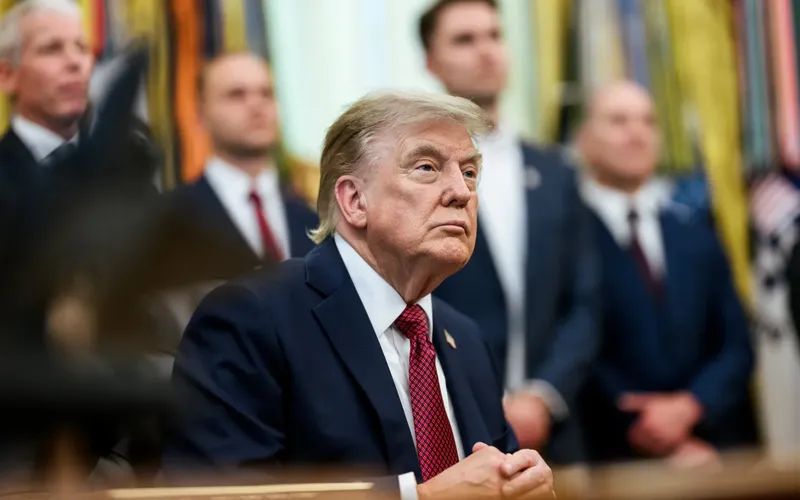
President Donald Trump signaled openness to safeguards governing the development of Super Intelligence during a Sunday interview with CBS's 60 Minutes, while warning that excessive regulations could put the United States behind China in a strategically important technology race.
Asked whether the country should accept the risks associated with the technology to maintain its lead over China, Trump said he believes the dangers are manageable and indicated he would be willing to work with Democrats on safety measures.
"I don't mind guardrails," Trump told CBS interviewer Ross Douthat. However, he cautioned against regulations that could place the United States in "a deep second position" behind China, which he argued operates without comparable restrictions.
Trump described the competition with China as a major reason for his support of the technology, arguing that allowing Beijing to take the lead could create a significant national security and economic disadvantage for the United States. He also said Chinese President Xi Jinping is committed to advancing the technology, which Trump referred to as "SI," or Super Intelligence.
When asked about concerns raised by technology executives and researchers over the possibility that advanced systems could pose serious risks to humanity, Trump questioned whether those dangers were as significant as some have suggested. He maintained that the risks could be managed and pointed to the Justice Department as one avenue for addressing potential misconduct.
Trump's comments indicate some openness to federal safeguards, although he did not outline specific regulations or explain what form those protections might take. His position also leaves room for cooperation with Democrats on the issue, despite his continued opposition to measures that could weaken America's competitive position.
The remarks come as the administration faces decisions over how to balance rapid technological development, national security and potential safety concerns. Trump has previously favored allowing technology companies to oversee much of their own development rather than imposing broad government restrictions.

Comments
No comments yet. Be the first to share your thoughts.