
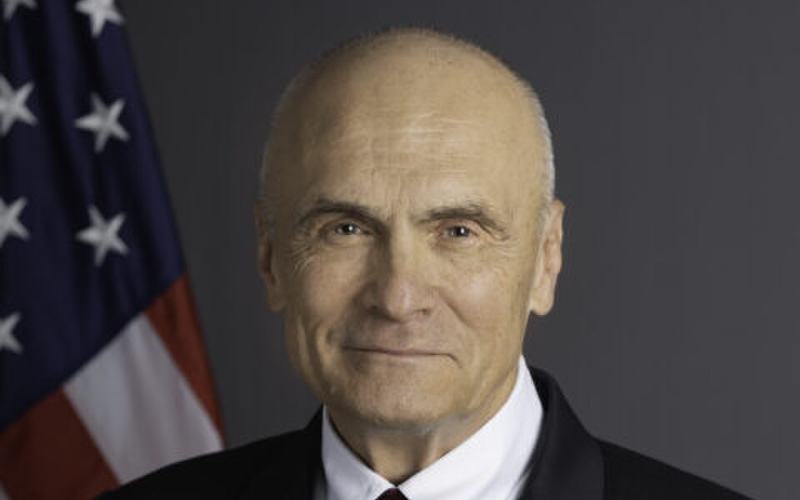
The U.S. ambassador to the European Union, Andrew Puzder, has warned that European companies could face “devastating” retaliation from Washington if the bloc moves ahead with plans that could restrict SpaceX and other American satellite operators from parts of the European market, according to a Sunday report by the Financial Times.
The dispute centers on a European Commission proposal to reserve much of a mobile-satellite frequency band for European companies. The spectrum allows satellites to connect directly with smartphones, a capability used by services such as SpaceX’s Starlink.
Under the proposed changes, American operators could face more limited access to the frequencies as the EU seeks to strengthen its domestic space industry and reduce reliance on foreign technology providers. The current licenses held by U.S. companies Viasat and EchoStar date to 2009, with changes potentially affecting access after their licenses expire in 2027.
Asked whether European companies should be concerned about retaliation, Puzder told the Financial Times that they “should be wary that it could happen and it would be very devastating for those companies,” pointing to the size and importance of the American market. He did not publicly specify what retaliatory measures Washington might take.
SpaceX has also criticized the proposed restrictions, warning that limiting its access to spectrum could affect connectivity in Ukraine, where Starlink has played a significant role in civilian and military communications since Russia’s full-scale invasion.
The proposal has not been finalized. It must still go through negotiations involving the European Parliament and EU member governments, leaving room for changes before any new allocation rules take effect.
The dispute adds to broader tensions over technology regulation and market access between Washington and Brussels. U.S. officials argue that rules favoring European firms could disadvantage American companies, while EU policymakers say reserving spectrum for domestic operators would help develop Europe’s own satellite infrastructure and technological independence.

Comments
No comments yet. Be the first to share your thoughts.