

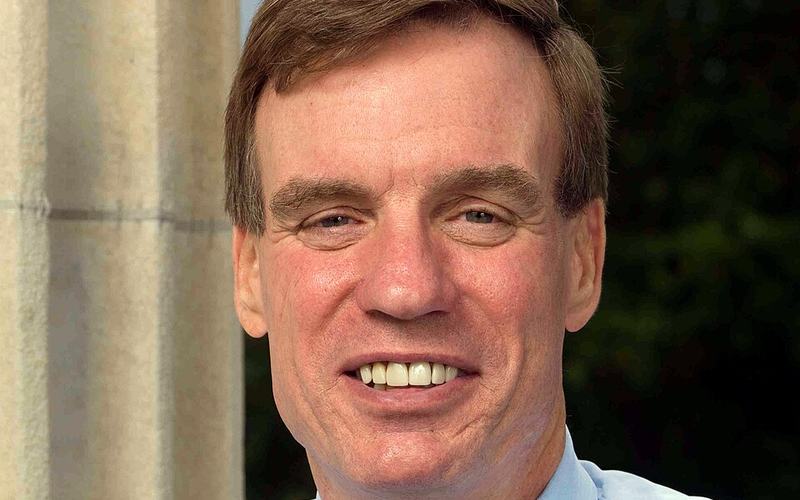
Democratic Sen. Mark Warner has defeated Republican challenger Bert Mizusawa in Virginia’s U.S. Senate race, securing a fourth six-year term and turning back the GOP’s effort to flip the seat. The Associated Press called the U.S. Senate race in Virginia for the Democratic incumbent shortly after polls closed on election night.
Warner’s victory preserves Democratic control of both of Virginia’s Senate seats, while Republicans lose another opportunity to expand their representation in the chamber. The result does not determine which party will control the Senate, with that outcome dependent on several other closely watched contests across the country.
Warner has represented Virginia in the Senate since 2009, following a term as the state’s governor from 2002 to 2006. Before entering politics, he built a fortune in the telecommunications industry, co-founding the company that became the cellular carrier Nextel. He has since become one of Virginia’s most prominent Democratic political figures and currently serves as vice chairman of the Senate Intelligence Committee.
During his campaign, Warner emphasized his experience in Washington and argued that another term would allow him to address what he described as damage caused by the Trump administration. He highlighted his work on infrastructure, broadband expansion, semiconductor manufacturing and national security, while also emphasizing healthcare affordability and his relationships with lawmakers in both parties.
Warner’s decision to seek a fourth term drew attention because he had previously pledged to serve only two terms when he first ran for the Senate in 1996. He acknowledged that earlier commitment during the campaign but argued that the political circumstances and responsibilities facing the country had changed.
Mizusawa, a retired U.S. Army major general, sought to make the case that Virginia needed a senator with direct military and national-security experience who could work with President Donald Trump. He served in the Army from 1979 to 2016, retiring after a career that included four combat tours. His government experience included serving as deputy under secretary of the Army, working on the staff of the Senate Armed Services Committee and advising the director of the CIA.
A West Point graduate who also earned degrees from Harvard Law School and the Harvard Kennedy School, Mizusawa presented himself as a national-security professional rather than a traditional career politician. His campaign emphasized military readiness, government spending, tax simplification and stronger border enforcement. He also argued that his relationship with Trump could give Virginia a more influential voice in the administration.
Mizusawa faced a substantial financial disadvantage throughout the campaign. Federal campaign finance records showed Warner had raised approximately $27.5 million through October 14, compared with roughly $1.1 million for the Republican challenger. Warner also had more than $6 million remaining in campaign funds, while Mizusawa reported approximately $154,000. The disparity gave the incumbent a significant advantage in maintaining a statewide campaign operation and advertising presence.
The Republican challenger also faced the challenge of running against an incumbent with a lengthy electoral record. Warner won reelection in 2020 with 56% of the vote, defeating Republican Daniel Gade by approximately 12 percentage points. Republicans have not won a Virginia U.S. Senate election since John Warner’s victory in 2002, leaving Mizusawa to overcome a difficult political environment.
The candidates also disagreed over the Trump administration’s foreign policy, particularly the conflict involving Iran. Mizusawa defended Trump’s military decisions and argued that the president had access to intelligence unavailable to the public. He said he would prefer to disagree with the president privately rather than publicly. Warner criticized the administration’s approach and argued that congressional oversight and diplomatic efforts were necessary.
On domestic policy, Warner emphasized healthcare coverage, technology investment and reducing household expenses. Mizusawa called for greater domestic energy production, including oil, natural gas and nuclear power. He also proposed eliminating the capital gains tax on sales of primary residences and increasing accountability for federal Medicaid spending.
Warner’s victory gives Democrats another six years of representation from Virginia and keeps the state’s two Senate seats in Democratic hands. Republicans will have to look elsewhere for additional Senate gains as the national balance of power remains dependent on the results of other races.
With another term secured, Warner will return to Washington as one of Virginia’s most experienced political figures and continue his work on the Senate Intelligence Committee. Mizusawa’s defeat ends his first campaign for elected federal office, despite his extensive military and government background.

Comments
No comments yet. Be the first to share your thoughts.