
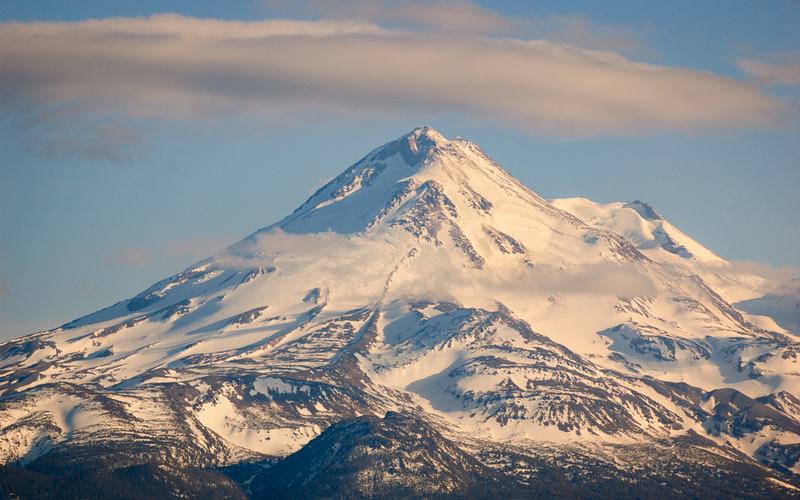
Three novice climbers had to be rescued from Mount Shasta last week after relying heavily on Google’s Gemini AI chatbot while planning their trip, according to a U.S. Forest Service report.
The college students began their climb Saturday from the Clear Creek Trailhead on Mount Shasta’s southeastern flank, planning to camp partway up before attempting the summit Sunday morning. The group had researched the route using YouTube videos and Google Gemini, asking the chatbot for advice about navigation, food, and water. They planned to use the AllTrails smartphone application for navigation.
The Clear Creek route stretches about eight miles and climbs approximately 6,500 feet. The climbers eventually reached the summit Sunday evening, after the midafternoon turnaround time recommended by rangers.
During their descent, the group mistakenly followed a digitally suggested route line displayed by AllTrails, believing it represented an actual trail. Nick Meyers, the Forest Service’s lead climbing ranger and director of the Mount Shasta Avalanche Center, said the lines are suggested routes rather than established trails.
The climbers then lost their primary means of navigation when their phone died. A backup power bank also failed to connect properly, leaving the group “well off-route,” according to the Forest Service report.
The three spent Sunday night outdoors before calling for help. Rangers reached them Monday morning and found them exhausted, hungry, and thirsty, with limited food and water and inadequate clothing and gear. The climbers were escorted back to base camp.
The Forest Service report also said Gemini had advised the climbers to prioritize simple carbohydrates over fats because fats supposedly take too long to digest. The chatbot also reportedly told them they would not need additional layers of clothing, leaving them poorly prepared for overnight conditions on the mountain.
The group later acknowledged their reliance on AI contributed to their problems.
“We relied too much on AI rather than our own critical thinking,” one of the climbers told rangers.
The Forest Service described their reliance on the technology as “a critical misstep.” Meyers said rangers have encountered other incidents this year involving visitors who relied on AI-generated information for Mount Shasta trips, including inaccurate maps and incorrect camping advice.
“This is the first year where we’ve started to have some AI fallout,” Meyers said, noting that people are increasingly using AI for outdoor trip planning even though its information is not always accurate.
The incidents have highlighted the risks of relying on AI-generated information for activities where inaccurate directions, equipment recommendations, or safety advice can have serious consequences.

Comments
No comments yet. Be the first to share your thoughts.