
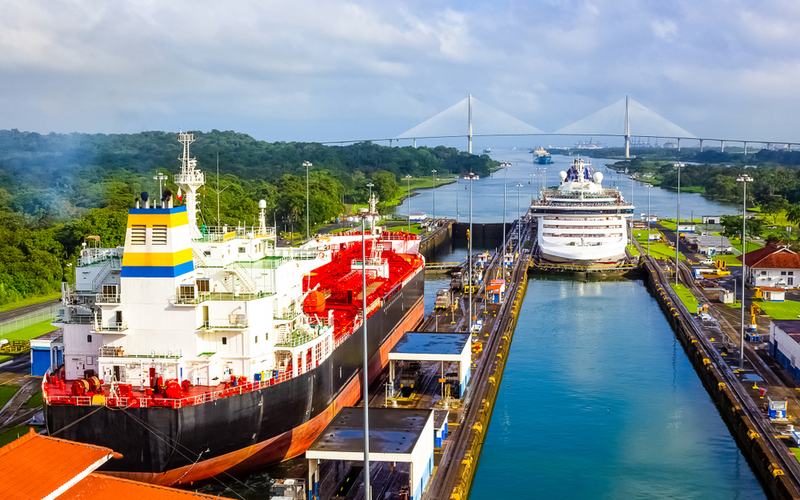
The Panama Canal Authority warned Monday that it may need to reduce daily ship transits to as few as 27 in the coming months due to declining water levels.
New administrator Ilya Espino de Marotta told the Financial Times that the reduction from the already planned level of 32 transits per day would represent a worst-case scenario modeled on rainfall patterns from 1997, the driest year on record for the canal.
The canal has already begun tightening capacity. Daily transits fell from 36 to 34 on September 4 and are scheduled to drop further to 32 starting September 15. Draft restrictions for larger vessels have also been implemented to conserve water ahead of the dry season.
Espino de Marotta noted that the authority stored additional water in advance, keeping the potential low point above the 22 transits reached during the severe 2023 drought. The canal relies on rainwater stored in two reservoirs to operate its locks, and inflows this year have been sharply below average.
The restrictions come as global shipping faces added pressure from disruptions linked to the Iran War and constraints around the Strait of Hormuz. Auction prices for transit slots have surged, with average costs for standard and larger locks rising to $478,750 and $1.25 million respectively in recent months, up from earlier levels.
El Niño conditions are expected to intensify the drought, with forecasts pointing to a strong or very strong event continuing into 2027. Panama has declared a nationwide emergency over the weather pattern, which has already prompted similar alerts in neighboring countries.
The waterway handles about 5 percent of global maritime trade and a significant share of U.S. container traffic. Reduced capacity raises costs for shippers and contributes to longer routes around South America for some vessels.

Comments
No comments yet. Be the first to share your thoughts.