
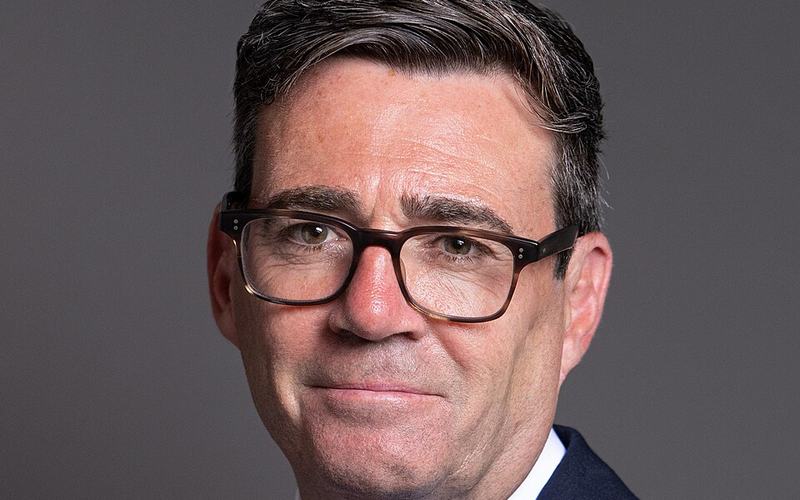
British Prime Minister Andy Burnham has said he is open to issuing a formal apology on behalf of the United Kingdom for its role in the transatlantic slave trade, potentially opening the door to a historic acknowledgment of Britain's involvement in the forced enslavement of millions of Africans.
Burnham outlined his position in an opinion article published in The Guardian on Saturday, October 31, ahead of the Commonwealth Heads of Government Meeting in Antigua and Barbuda. The summit brings together leaders from 56 independent nations, many of which were once part of the British Empire. Slavery and its lasting consequences are expected to be major topics of discussion.
The prime minister said Britain must confront its complicated history rather than avoid discussions about the country's involvement in the slave trade. He announced that his government would offer a structured dialogue with nations and communities affected by slavery, with the possibility of a formal apology forming part of those discussions.
“For years, those members of the Commonwealth affected by the slave trade have asked for an honest conversation about the legacies of slavery,” Burnham wrote. “By sticking our heads in the sand, we have damaged the ability of the Commonwealth to function.”
Burnham also expressed personal sorrow over the suffering endured by millions of enslaved Africans, acknowledging that the consequences of the slave trade continue to shape societies around the world.
“The transatlantic slave trade was a brutal and barbaric violation of those people. They were denied their humanity. They were separated from their families, treated as property and worked to their deaths,” he wrote. “I want to express my sorrow and regret for the pain and suffering of so many millions and to recognise the way it still shapes our world today.”
However, Burnham drew a distinction between acknowledging Britain's historical responsibility and providing financial compensation to descendants of enslaved people or affected nations. He explicitly rejected calls for financial reparations, arguing that present-day British citizens should not be held responsible for actions committed centuries ago.
“I do not think that British people today can be held liable for historical wrongs, however heinous, which happened in a different age under different laws and in which they played no personal part,” Burnham said.
Instead, he proposed working with wealthy nations and international investors to help struggling Commonwealth countries restructure their debt, allowing them to repay loans over longer periods and at lower interest rates. Former British Prime Minister Gordon Brown is expected to assist with the proposed debt initiative.
Britain transported an estimated 3.2 million enslaved Africans across the Atlantic during the transatlantic slave trade, according to historical estimates. The country became one of the world's largest slave-trading powers before Parliament outlawed the British slave trade in 1807 and abolished slavery throughout most of the British Empire in 1833.
Caribbean leaders have spent decades demanding that Britain formally acknowledge its role and provide reparations for the economic and social consequences of slavery. Their proposals have included financial compensation, debt cancellation, education and healthcare investments, development funding and assistance addressing the lasting effects of colonialism.
The Caribbean Community, known as CARICOM, cautiously welcomed Burnham's willingness to consider an apology but made clear that rejecting reparations would remain a major point of disagreement. CARICOM Chairman and Saint Lucia Prime Minister Philip J. Pierre said an apology would be an important step but argued that acknowledgment without meaningful action would be insufficient.
“A dialogue that begins by placing reparations outside the room cannot be a complete dialogue,” Pierre said.
Burnham's position has also drawn criticism from Britain's opposition Conservative Party. Conservative Party leader Kemi Badenoch rejected the proposal for a formal apology, arguing that it could encourage additional demands for financial compensation and distract from Britain's present-day priorities.
“I don't think that Andy Burnham needs to be apologising because it is a lever to wedge open the door to ask for cash,” Badenoch said. She also argued that Britain's historical record should include its role in eventually abolishing the slave trade.
The debate comes as King Charles III continues a Caribbean tour that includes Antigua and Barbuda. The monarch has acknowledged the suffering and injustices associated with slavery but has stopped short of issuing a formal apology or committing the British government to reparations.
Burnham's willingness to consider an official apology represents a departure from the longstanding position of successive British governments, which have generally resisted formal apologies and financial compensation for the country's historical involvement in slavery. Whether the discussions produce an official statement remains uncertain, but the issue is expected to remain a central point of debate during the Commonwealth summit.

Comments
No comments yet. Be the first to share your thoughts.