
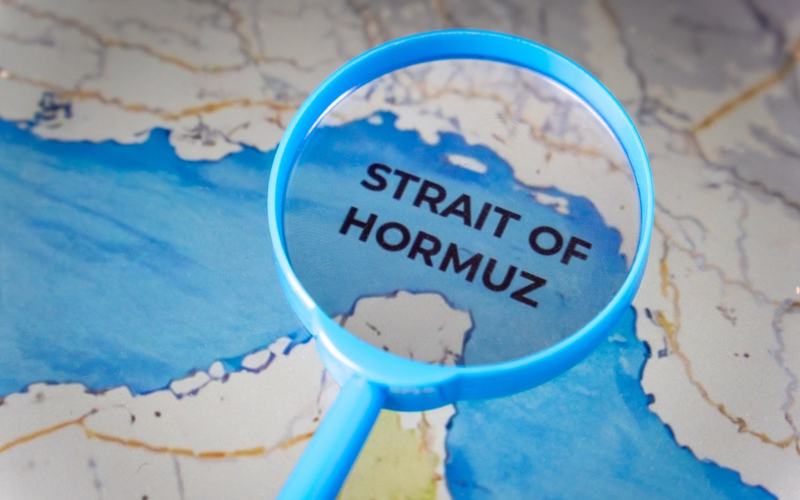
Iran announced Monday that it could reopen the strategically important Strait of Hormuz within two days if the United States agrees to a series of demands, offering a potential diplomatic path toward ending the eight-month conflict while maintaining pressure on President Donald Trump to lift American sanctions and its naval blockade of Iranian ports.
Iranian Foreign Ministry spokesman Esmaeil Baghaei said the proposed timeline had been shortened from the seven days originally outlined in Tehran's September peace plan. He described the accelerated timetable as evidence that Iran was prepared to pursue a diplomatic resolution, but made clear that reopening the waterway remained conditional on Washington accepting Tehran's terms.
"The possibility of implementing this plan in two days is another indication of Iran's good-faith approach," Baghaei said.
Iran's demands include an end to the U.S. naval blockade of Iranian ports, the unfreezing of Iranian assets held abroad, the lifting of sanctions on its oil industry and a broader ceasefire covering all fronts, including Lebanon. Tehran also wants commercial ships traveling through the Strait of Hormuz to follow a new route agreed upon by Iran and Oman, with vessels operating under Iranian supervision. Iranian officials have additionally called for reductions in American military forces in the region.
There has been no indication that the Trump administration has accepted those conditions. The United States previously rejected Iran's seven-step proposal, and the latest diplomatic exchanges have yet to produce an agreement.
The announcement followed three days of indirect discussions involving Iranian negotiators and Qatari mediators in Doha. Iranian officials left Qatar on Sunday, but a source briefed on the discussions told Reuters that their departure was not caused by a breakdown in negotiations. A draft proposal was being circulated Monday, with another meeting still possible.
Baghaei confirmed that communications between Tehran and Washington were continuing through intermediaries and placed responsibility for the next step on the United States.
"The ball is in the U.S. court," he said.
The diplomatic developments come as Trump continues to weigh his military options. The president has repeatedly said he does not intend to launch another attack on Iran before Tuesday's midterm elections, but he has not ruled out renewed strikes afterward.
On Saturday, Trump said there were still one or two Iranian targets that the United States needed to address, including a suspected nuclear facility known as Pickaxe Mountain in central Iran. The site is believed by Washington to contain nuclear infrastructure, an allegation Tehran disputes.
Trump delivered another warning Sunday during an interview with Right Side Broadcasting Network, saying the conflict would soon end one way or another.
"Either they'll make a deal, or we'll just end it," Trump said.
The president also revealed that he had held what he described as a "very good talk" with Israeli Prime Minister Benjamin Netanyahu about the conflict. However, the two governments have reportedly differed over how long diplomatic negotiations should continue. Trump has shown interest in allowing additional time for a potential agreement, while Netanyahu has pressed Washington to consider another round of strikes after the American midterm elections.
The Associated Press reported Monday that Netanyahu was urging Trump to authorize further military action, citing officials familiar with the discussions. Trump has not publicly committed to that course.
Iran, meanwhile, has warned that renewed American attacks would trigger a major response. Baghaei said Tehran would not hesitate to retaliate against another military operation.
"Any act of aggression against Iran, any military attack against Iran, by whatever means, will be met with a powerful, immediate, and comprehensive response from us," he said.
The conflict has also created significant economic pressure, particularly through disruptions to global energy shipments. The Strait of Hormuz normally carries approximately one-fifth of the world's oil supply, making its continued disruption a major concern for energy markets and countries dependent on Middle Eastern exports.
American consumers have also faced elevated gasoline prices. Reuters reported that the average price of regular gasoline during Trump's second presidency had reached $3.472 per gallon, narrowly above the $3.471 average recorded during former President Joe Biden's administration, based on AAA data. Those figures represent averages across the two presidential terms, not record prices.
Oil prices fell Monday as markets responded to renewed hopes that negotiations could produce an agreement and restore commercial shipping through the strait. However, the prospect of renewed military action continues to create uncertainty for energy markets.
Despite Iran's offer to accelerate its reopening timetable, the central disagreements remain unresolved. Tehran wants sanctions relief, an end to the American blockade and control over shipping arrangements through the waterway, while Washington has yet to indicate that it will accept those conditions. With the midterm elections approaching and Trump keeping military action on the table, the next round of diplomatic negotiations could determine whether the conflict moves toward a settlement or another escalation.

Comments
No comments yet. Be the first to share your thoughts.