

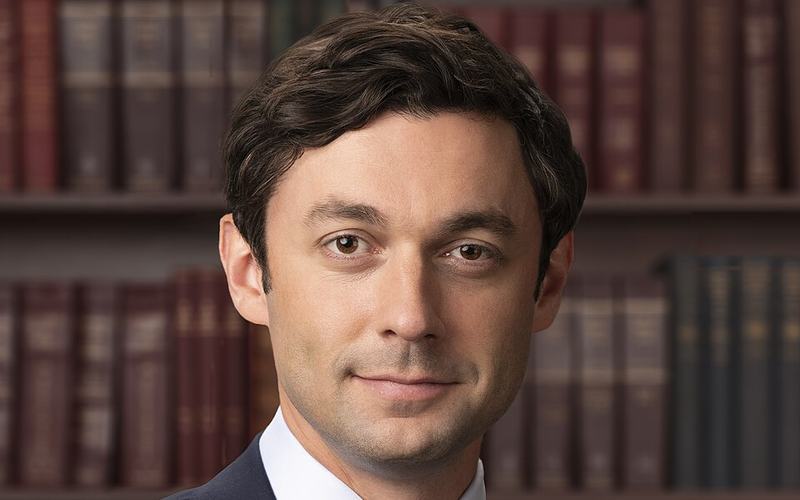
Democratic Sen. Jon Ossoff defeated Republican Rep. Mike Collins in Georgia’s closely watched U.S. Senate race according to the Decision Desk, securing another six-year term and turning back a Republican effort to capture one of the party’s top Senate targets.
Decision Desk HQ projects Jon Ossoff wins the GA US Senate General Election#DecisionMade: 7:18 PM EST
— Decision Desk HQ (@DecisionDeskHQ) November 4, 2026
Follow live results here: https://t.co/JUE5jgmAa5 pic.twitter.com/6h8LK0HDZm
Collins’ campaign was repeatedly overshadowed by ethics questions, controversies involving people connected to his congressional office and allegations surrounding his own public statements.
The result is a significant setback for Republicans, who had targeted Ossoff’s seat as a major opportunity to expand their Senate majority. Collins entered the general election with President Donald Trump’s endorsement and the backing of national Republican organizations, but struggled to keep the campaign focused on the issues he wanted voters to consider.
Collins faced a series of controversies that raised questions about his judgment and the people surrounding his political operation. One of the most serious involved a House ethics investigation into allegations that his congressional office improperly paid an intern who allegedly performed little or no work. A nonpartisan congressional watchdog found substantial reason to believe that Collins’ office had misused congressional resources. The report focused on the hiring of Caroline Craze, who was reportedly dating Collins’ former chief of staff, Brandon Phillips.
The allegations prompted a review by the House Ethics Committee. Collins and his attorneys disputed the accusations, describing the complaint as politically motivated and maintaining that the intern’s employment was legitimate. Nevertheless, the investigation became a persistent issue throughout his Senate campaign, giving Democrats an opportunity to question Collins’ stewardship of taxpayer resources.
Collins also faced scrutiny over his connections to individuals accused of promoting white nationalist and antisemitic views. His son-in-law, David Alan Scheer II, was reported to have shared social media posts promoting antisemitic conspiracy theories and white nationalist positions. Property and voter records also connected Scheer to a residence owned by Collins.
Another controversy involved a former Collins staffer who posted images of a swastika and photographs depicting himself in what appeared to be Ku Klux Klan robes. The revelations prompted criticism from Republicans as well as Democrats, with some conservative activists questioning why Collins’ political operation had become associated with individuals whose public conduct drew such serious criticism.
Collins also attracted criticism for his own social media activity. Previous posts involving a Black protester and a Jewish journalist drew accusations of racist and antisemitic conduct. Collins rejected those characterizations, saying his criticism was directed at the individuals’ political views rather than their race or religion. Still, the controversies added to concerns among some Georgia Republicans that his campaign was creating unnecessary political problems.
The candidate’s campaign also faced criticism over its messaging and organization. Collins initially attracted widespread attention after his campaign launch video misspelled Georgia as “Georiga.” Republican strategists and conservative commentators subsequently questioned whether he had developed a message capable of appealing beyond Trump's strongest supporters. Some worried that the controversies and campaign missteps were making it harder for Republicans to unite behind their nominee.
Those concerns were particularly damaging because Collins was challenging an incumbent with an established statewide profile. Ossoff, who first won his Senate seat in the 2021 runoff election, had spent years building a national reputation through his investigations, public appearances, and criticism of the Trump administration. His campaign portrayed Collins as a candidate whose controversies and political baggage distracted from the economic and policy issues facing Georgia voters.
Ossoff’s victory also places renewed attention on his potential future in national Democratic politics. With the 2028 presidential election approaching, his reelection gives him another opportunity to build his profile among Democratic voters nationwide. His age, fundraising ability, and high-profile role in the Senate have contributed to speculation that he could eventually be considered for a presidential campaign.
However, Ossoff has publicly rejected the idea that he is preparing to run for the White House. During an October debate with Collins, he said he had “zero interest” in running for president in 2028 and committed to serving a full six-year Senate term if reelected. That statement has not stopped political observers from discussing his national ambitions, but any presidential campaign remains speculation rather than an announced plan.
For Republicans, Collins’ defeat represents a missed opportunity to unseat one of the Democratic Party’s most prominent senators. His campaign had the support of Trump and substantial assistance from Republican-aligned political organizations, yet the controversies surrounding his congressional office, political associates, and campaign operation became central features of the race.
Ossoff now returns to Washington with another six-year term and an even larger national platform. His victory gives Democrats an important win in their effort to compete for control of the Senate, although the overall balance of power will depend on the results of other closely contested races. In Georgia, the immediate result is clear: Republicans failed to take Ossoff’s seat, and the senator will remain a central figure in the Democratic Party as it looks toward the next presidential election.

Comments
No comments yet. Be the first to share your thoughts.