
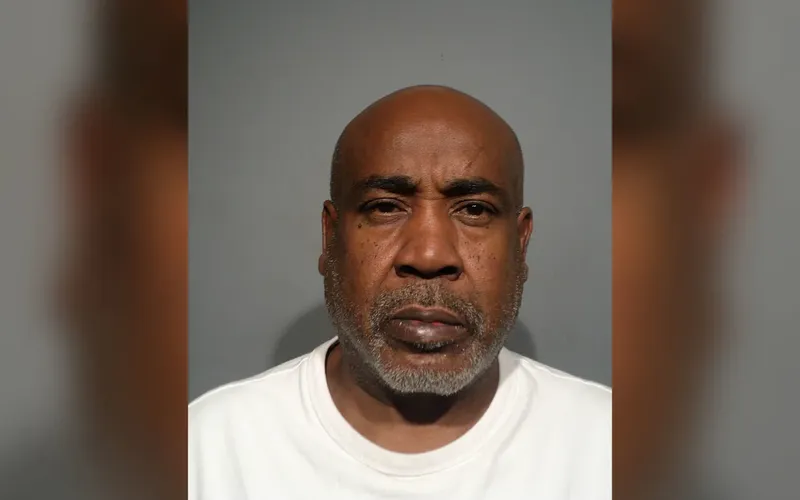
Duane “Keffe D” Davis, the former Los Angeles gang leader convicted of first-degree murder in Tupac Shakur’s killing, will spend at least decades behind bars after a Nevada judge handed down a sentence of 40 years to life in prison.
Clark County District Judge Carli Kierny sentenced the 63-year-old Davis on Tuesday, ordering him to serve 20 years to life for first-degree murder, followed by a consecutive 20 years to life for using a deadly weapon. He received credit for 731 days already served in custody.
“You don’t get to take a man from his family,” Kierny told Davis. “You don’t get to take his very life, his whole future from him and just walk away from it.”
A Clark County jury convicted Davis in August after less than three hours of deliberations, unanimously finding him guilty of first-degree murder with the use of a deadly weapon. Prosecutors argued that Davis organized the shooting, although he was not accused of firing the fatal shots himself.
Davis was arrested in September 2023 and has remained in custody since. He pleaded not guilty and maintained his innocence throughout the case. His defense attorneys argued that he had fabricated accounts of his involvement and that prosecutors lacked sufficient evidence placing him in Las Vegas that night or inside the white Cadillac from which the shots were fired.
Prosecutors, however, pointed to Davis’ repeated public statements about the killing, arguing that his accounts were corroborated by other evidence presented at trial. Investigators said those statements helped breathe new life into a case that had remained unresolved for decades.
Shakur was shot on Sept. 7, 1996, while riding in a vehicle with Death Row Records founder Marion “Suge” Knight near the Las Vegas Strip. The shooting occurred after a Mike Tyson–Bruce Seldon boxing match. Shakur died six days later, on Sept. 13, at age 25.
Before the sentence was imposed, Shakur’s sister, Sekyiwa Shakur, addressed the court and described the lasting emotional toll his death inflicted on their family. She recalled her brother as a protector who helped care for younger family members while they were growing up in New York.
“The loss of Tupac for a long time crippled my entire family emotionally and mentally,” she said.
Sekyiwa also spoke about her brother’s ambitions, saying their mother raised him to become a human rights activist and that he hoped his success would change how society viewed Black men from backgrounds similar to his own.
“He had so much promise, intentions for a better world for our people,” she said. “He had plans. He had manifestos.”
The sentence marks a major development in one of hip-hop’s most notorious unsolved murders, which haunted Shakur’s family and fans for nearly three decades before Davis was arrested and brought to trial.

Comments
No comments yet. Be the first to share your thoughts.