

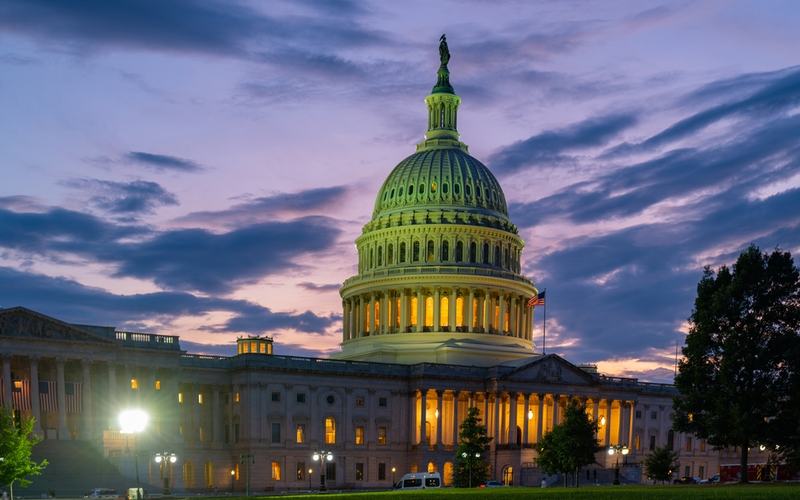
Democrats have retaken control of the U.S. Senate, according to projections from the Associated Press, Decision Desk HQ, and other major outlets, after flipping at least six Republican-held seats in a midterm election that delivered a sharp rebuke of President Donald Trump’s administration.
Republicans entered Election Day with a 53-47 majority. Democrats needed a net gain of four seats to secure outright control, as Vice President JD Vance would have cast the deciding vote in a 50-50 chamber. Early returns showed the party surpassing that threshold with a series of victories in states that had moved solidly toward Republicans in recent cycles, including several Trump carried by double digits in 2024. The final size of the Democratic majority remained fluid early Wednesday as votes continued to be counted in a handful of remaining contests.
The path to the majority ran through a string of unexpected and historically significant pickups. In Ohio, former Sen. Sherrod Brown defeated appointed Republican Sen. Jon Husted in the special election to fill the remainder of the term previously held by JD Vance. Brown, who lost reelection in 2024, returned to the chamber in one of the most expensive Senate races in the country, with advertising spending exceeding $500 million. The contest drew massive outside investment as both parties treated the seat as pivotal to control of the chamber.
In Kansas, Methodist pastor Adam Hamilton ousted incumbent Sen. Roger Marshall, becoming the first Democrat elected to the Senate from the state since 1932. Hamilton, who had been registered as a Republican until earlier in the year, ran as a moderate and received endorsements from prominent Kansas Republicans. The result ended a 94-year drought for Democrats in a state that has long been a Republican stronghold.
In Iowa, state Rep. Josh Turek, a former Paralympian and wheelchair basketball player, defeated Rep. Ashley Hinson for the open seat left by retiring Sen. Joni Ernst. The Associated Press called the race for Turek late Tuesday night. The victory marked the first Democratic Senate win in Iowa since Tom Harkin’s reelection in 2008. Trump carried the state by 13 points in 2024, and the race had been viewed as a long shot for Democrats until late in the campaign, when economic concerns and the impact of tariffs and higher fuel prices reshaped the contest.
Additional Democratic gains were projected in North Carolina, where former Gov. Roy Cooper won the open seat vacated by retiring Sen. Thom Tillis; in Texas, where state Rep. James Talarico defeated Attorney General Ken Paxton; and in South Carolina, where Annie Andrews defeated appointed Sen. Darline Graham, the sister of the late Sen. Lindsey Graham. Democrats also held seats they were defending, including Georgia, where Sen. Jon Ossoff won reelection, and in New Hampshire.
The results reflected broader voter dissatisfaction with the cost of living, elevated fuel and diesel prices linked to the conflict involving Iran, tariffs, and the broader economic environment. Many of the flipped seats were in states that had become reliably Republican in the Trump-era. Republicans had entered the cycle with a map that initially appeared favorable, but competitive races emerged in multiple red-leaning states as the year progressed.
Control of the Senate will determine which party organizes the chamber, sets the legislative agenda, and confirms presidential nominees for the final two years of Trump’s term. Democrats last held the majority after the 2022 elections before losing it in 2024. With the majority, the party will be able to block the president’s nominees and control which measures receive floor votes. Official certification of individual race results is pending, and the final seat count will depend on the remaining uncalled contests in states including Maine, Alaska, Michigan, and Minnesota.

Comments
No comments yet. Be the first to share your thoughts.