
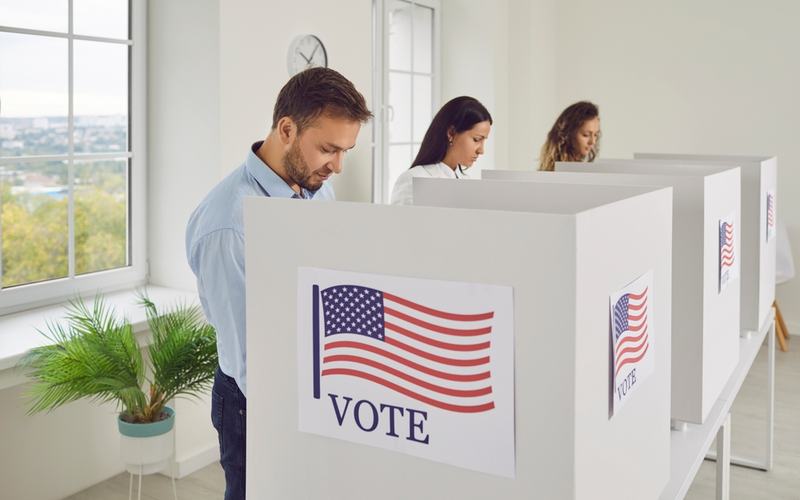
Polls opened Tuesday morning across the United States for the 2026 midterm elections, with all 435 House seats and 35 Senate seats on the ballot. Republicans hold slim majorities in both chambers heading into the day and seek to defend them as voters weigh in on the first two years of President Donald Trump's second term.
Early voting has already shattered records, with more than 50 million ballots cast nationwide before Election Day. Republicans currently hold a 53-47 edge in the Senate and a narrow majority in the House. Democrats need net gains of four seats in the Senate and several in the House to flip control.
The stakes are substantial for both parties. For Republicans, retaining congressional majorities is essential to advancing President Trump's priorities without obstruction. These include stronger border security measures, energy production expansion, and tax and regulatory relief aimed at reducing inflation and boosting economic growth. A GOP-controlled Congress can also confirm judicial and executive nominees aligned with originalist principles and limit investigations into the administration.
For Democrats, flipping one or both chambers represents their best chance to halt or slow those initiatives. Democratic leaders have signaled intentions to pursue oversight hearings, block funding for immigration enforcement, and push alternative spending priorities if they gain power. Such a shift would likely lead to legislative gridlock on key issues and renewed focus on investigations rather than policy advancement.
Key Senate battlegrounds include Michigan, Georgia, North Carolina, and Maine. In the House, competitive districts span from traditional swing areas in Pennsylvania and Ohio to border districts in Texas. Thirty-six states are also electing governors, which carries long-term implications for state-level policies and future redistricting.
Voters have cited the cost of living, inflation, and border security as top concerns in recent polling. The elections serve as a midterm referendum on the Trump administration's agenda, including economic policies and immigration enforcement.
Polls in most states close between 7 p.m. and 9 p.m. local time, with results expected to trickle in after 6 p.m. Eastern. Some races, particularly in the Senate, could require days or weeks to finalize due to mail ballots and potential runoffs. Special elections in Florida and Ohio add to the Senate map. Republicans are defending more seats than Democrats this cycle, increasing the challenge for the majority party.
State legislative races and ballot measures on issues such as abortion and redistricting are also before voters in multiple states. Turnout is expected to be robust following the heavy early voting numbers.

Comments
No comments yet. Be the first to share your thoughts.