
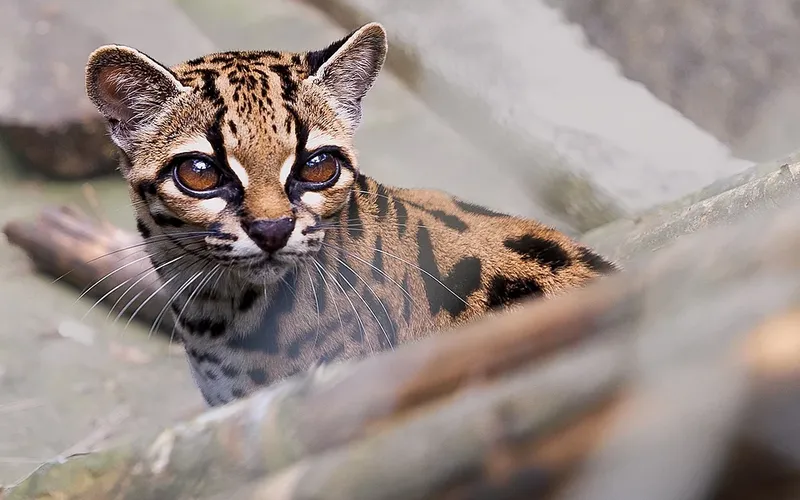
A small spotted wildcat from the cloud forests of Bolivia has been confirmed as a distinct new species, marking the first time scientists have described an entirely new living cat species in over a century.
The tilcayo, scientifically named Leopardus tilcayo, inhabits the Yungas region on the eastern slopes of the Andes. It measures roughly 18 inches from head to body and weighs about three pounds, making it smaller than the average domestic cat. Its light brown fur features irregular dark rosettes.
Researchers led by Eduardo Eizirik of the Pontifical Catholic University of Rio Grande do Sul and Paola Nogales-Ascarrunz of Universidad Mayor de San Andrés analyzed complete genomes from 38 individuals across the Leopardus genus. The work revealed five genetically distinct tiger cat species in South America, with the Bolivian population representing a previously unrecognized lineage that diverged from its closest relatives approximately 1.4 million years ago.
The study, published Thursday in the journal Current Biology, relied on both modern samples and historical museum specimens. Only one confirmed living tilcayo is currently known to science, a 10-year-old male nicknamed Tigrino that resides at the Senda Verde animal refuge in Bolivia.
Prior discoveries in the tiger cat complex included the southern tiger cat in 2013, another species in 2017, and the clouded tiger cat in 2024. The tilcayo stands apart as the first brand-new feline species added to the scientific record since the pampas cat in 1923.
Local communities in the Yungas have long used the name tilcayo for the animal. Scientists retained that term for the formal description. The finding underscores how genetic tools continue to uncover hidden biodiversity even in well-studied regions.

Comments
No comments yet. Be the first to share your thoughts.